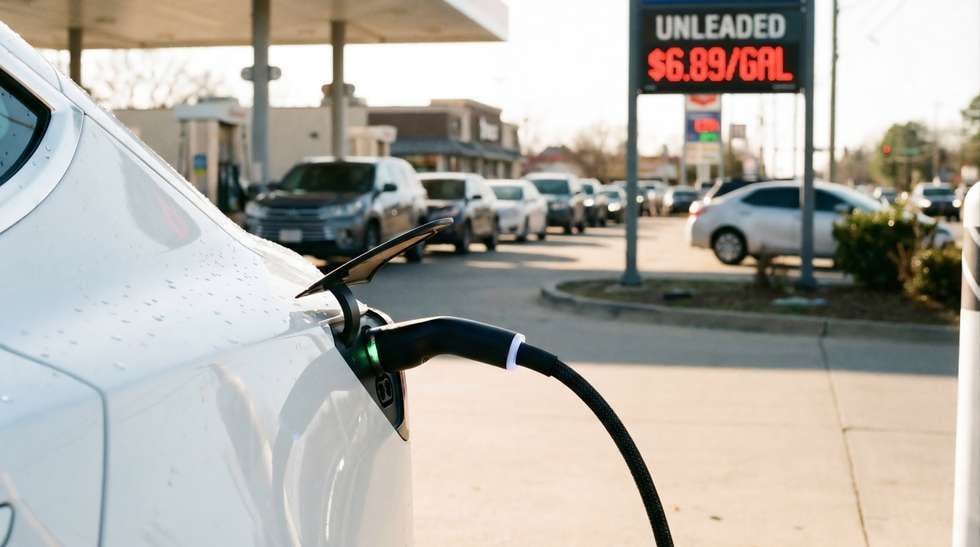
Gas prices go up. EV interest should follow. It's an intuitive idea, but according to a new Bumper.com survey of 2,228 people conducted April 3–6, 2026, it is largely wrong.
The data doesn't reveal consumers who want EVs but can't afford them. It reveals something more fundamental: most non-EV owners don't respond to rising fuel prices because they don't believe switching would save them any money in the first place. Two-thirds of respondents said an EV would save them exactly $0 compared to what they currently spend on gas.
That single finding reframes the entire adoption problem and demonstrates the knowledge gap that exists for many drivers.
The $0 Myth: A Widespread Misperception
Among the respondents who answered the question about expected savings from switching to an EV, the results were striking. A clear majority believe an EV would not save them a single dollar compared to what they currently spend on gas.
Expected savings from switching to an EV:
- $0 — no difference vs. gas: 67.4%
- $1–$100 per year: 5.0%
- $101–$200 per year: 5.9%
- $201–$500 per year: 7.7%
- $501–$1,000 per year: 5.0%
- $1,001+ per year: 9.0%
Nearly 67% of respondents selected “$0 — no difference.” Only 9% expected to save more than $1,000 per year.
This is not a marginal misconception. It is the dominant view among non-EV owners, and it creates a logical dead end: if consumers believe an EV costs the same to operate as a gas vehicle, no amount of price pain at the pump will make switching feel worthwhile.
If you do not believe the alternative saves money, why would rising prices push you toward it?
This perception is a critical piece of the puzzle in why many drivers have not made the switch to an EV. The economic argument for EVs has not landed before the price spike even arrives. According to Kelley Blue Book, EVs cost 30% more to repair than gas vehicles, deterring consumers from making the switch.
Gas Prices Are Not Converting Buyers
The survey asked non-EV owners directly whether rising gas prices had made them more curious about electric vehicles. According to AAA, gas prices have reached a record high since 2022, but that is not pushing people to buy EVs.
Have rising gas prices made you more curious about EVs?
- No — not more curious about EVs: 80.7%
- Yes — more curious about EVs: 14.8%
- Already own an EV: 4.5%
More than eight in ten non-EV owners said gas prices had not made them more curious about EVs.
When asked a follow-up question, whether they planned to buy an EV specifically to avoid gas costs, the resistance was even stronger.
Do you plan to buy an EV to avoid gas prices?
- No — will not buy an EV to avoid gas prices: 87.3%
- Yes — plan to buy an EV to avoid gas prices: 12.7%
Even among the 14.8% who said gas prices sparked curiosity, almost none converted that into purchase intent. The economic pain point of gas prices is not translating into EV consideration for most consumers.
This is the central puzzle the data raises: if fuel costs are not moving the needle, what is holding consumers back?
The answer, it turns out, is not reluctance to change. It is a fundamental misunderstanding of EV economics.
The Reality of What EV Owners Actually Pay
For most home chargers, installation runs around $2,000 for a Level 2 unit, though ongoing costs after that depend largely on where you live. State average residential electricity rates range from roughly 10 cents per kWh on the low end to more than 30 cents on the high end.
The most efficient way to charge an EV is at home, and that is where the real savings are. Public fast-charging networks charge rates that are often two to three times higher than residential electricity prices.
According to Kelley Blue Book, for a typical driver covering about 1,015 miles per month, based on the American average of roughly 12,200 miles per year, an EV consumes approximately 338 kWh monthly.
At the current U.S. household average of 17.65 cents per kWh, that works out to around $60 per month, or about $715 per year, to charge at home.
Why the Myth Persists
The $0 myth does not exist in isolation. Two additional findings from Bumper’s survey help explain why accurate information about EV savings has struggled to reach non-owners.
First, charger access remains a significant practical barrier. Among respondents who answered the question, more than 70% reported no easy access to an EV charger.
Do you have easy access to an EV charger?
- No easy access to a charger: 70.5%
- Yes — have access to a charger: 15.1%
- Unsure: 14.4%
When consumers lack access to charging infrastructure, the question of whether an EV saves money becomes almost academic. The practical barrier arrives before the economic calculation even begins.
The $0 myth may be reinforced, in part, by the sense that EVs simply are not workable in everyday life.
Second, budget expectations among prospective buyers are significantly misaligned with real market prices. The most common budget expectation among prospective buyers who answered was $10,000 or less, a price point that excludes nearly all new EVs and many used ones.
This suggests the knowledge gap extends beyond operating cost savings. Many consumers also have an incomplete picture of what EVs actually cost to purchase.
A Messaging Problem, Not a Product Problem
The data from this survey points to a clear and actionable conclusion: the primary barrier to EV adoption among non-owners is not the vehicles themselves, not gas prices, and not even purchase cost alone.
It is misinformation, specifically a widespread and deeply held belief that EVs offer no financial advantage over gasoline.
This is, in an important sense, good news. Misinformation is a solvable problem.
If two-thirds of Americans simply do not know that EV owners routinely spend $100–$500 per year on charging compared to the hundreds or thousands many spend on gas, then closing that knowledge gap represents a significant and largely untapped opportunity.
Gas price fluctuations, by themselves, are unlikely to change minds when consumers do not believe EVs offer a financial escape.
The path to moving this audience runs not through fuel price anxiety, but through clear, credible, owner-sourced data about what electric driving actually costs.
The people who made the switch already know the answer. The challenge is making sure everyone else hears it.
Methodology
This data study is based on a Hotjar survey conducted on Bumper.com between April 3–6, 2026. Total responses: 2,228.
Respondents skewed toward desktop users, at 56.6%, and were predominantly located in the United States.
Data is self-reported and reflects consumer perception rather than verified financial outcomes.