A used car can be mechanically sound on the surface and still be a vehicle that was driven in ways that accumulate invisible damage, such as hard acceleration, hard braking, track use, aggressive towing, chronic neglect, or modifications that were made and reversed before sale. None of these appear in a listing. Some appear in the ownership history. Most require you to know what to look for.
The challenge is that a seller describing how a car was driven has no obligation to be accurate and every financial incentive to be optimistic. "Highway miles," "driven by a grandma," and "garage kept" are phrases that appear in listings regardless of whether they are true. The car itself is a more reliable narrator — if you know how to read it.
This guide identifies the specific physical, mechanical, and behavioral indicators that distinguish a well-driven car from one that was used hard, neglected systematically, or modified in ways that shortened its service life. It is part of The Forensic Buyer's Guide and works alongside the vehicle ownership history analysis and the complete used car inspection checklist.
Run a VIN check on the vehicle before the physical inspection. Service record gaps, mileage anomalies, and multiple short-term owners are the data-level indicators of a car that people kept selling — and the physical inspection below tells you what they found when they looked closely.
Why Abuse Indicators Matter Beyond Mechanical Condition
Direct answer: A car that was driven hard may pass a standard mechanical inspection while carrying significantly more accumulated stress on its engine, transmission, cooling system, and suspension than a same-mileage car driven normally. Mechanical abuse accelerates wear in ways that are not always measurable at the time of inspection — stretched timing chains, heat-stressed gaskets, transmission clutch packs with reduced remaining life, and suspension bushings that are soft before they are visibly failed. The abuse indicators in this guide are the observable signals of that accumulated stress.
The distinction between hard-driven and well-maintained is not binary. A car can be driven enthusiastically and maintained meticulously — track-day cars with documented service histories exist and can be excellent purchases at the right price. What matters is whether the driving style is reflected in the maintenance record and the asking price. A hard-driven car that received appropriate maintenance and is priced accordingly is a different proposition than a hard-driven car represented as a gentle commuter at a full market price.
Category 1: Interior Wear Indicators
Direct answer: The interior accumulates wear in proportion to how hard and how frequently the car was driven. Wear patterns on the pedals, steering wheel, driver's seat, and gear selector that are more advanced than the odometer reading would indicate either mileage that is higher than recorded or driving that was more demanding than average.
The Pedal Wear Test
Look at the rubber surface of the brake, accelerator, and clutch pedals (on manual transmission vehicles). Factory pedal rubber has a textured surface with a consistent grip pattern molded in. Normal wear smooths the high points of the texture gradually. Hard driving — frequent hard braking, aggressive left-foot braking, performance driving — accelerates pedal wear dramatically.
What to look for:
- Brake pedal rubber worn smooth and shiny in the center contact zone — indicates frequent, firm brake application
- Accelerator pedal worn through to the metal substrate — indicates extremely high use or very aggressive driving
- On manual transmissions: clutch pedal worn significantly more than the brake pedal — indicates a driver who rode the clutch or operated it aggressively
The mileage consistency check: A car listed at 40,000 miles with brake pedal rubber worn to a smooth shine has been driven more aggressively than 40,000 average miles would produce. Compare the pedal wear to what is normal for the vehicle's listed mileage.
Steering Wheel Wear
Factory steering wheel leather or urethane shows wear at the 9 o'clock and 3 o'clock positions — where hands rest during normal driving — as a gentle polishing of the surface over time. Hard drivers grip the wheel at the 10-and-2 or 9-and-3 positions under hard cornering and acceleration, producing concentrated, aggressive wear at those grip points.
A steering wheel that is polished or cracked in a pattern inconsistent with relaxed cruising grip indicates either high mileage or aggressive driving. A steering wheel that has been replaced — different material, color, or texture than the dash trim — may indicate an aftermarket performance upgrade that was subsequently removed.
Driver's Seat Bolster Wear
The outer bolster of the driver's seat — the raised cushion section on the outboard edge — wears when the driver's body loads it during cornering. Normal driving produces minimal bolster wear. Spirited driving, track use, or consistently aggressive cornering produces concentrated wear on the outer bolster surface as the driver's body consistently loads that side under lateral G-force.
A driver's seat with pronounced bolster wear on the outboard edge at mileage that does not justify it is a car that spent time being driven hard through corners.
Aftermarket Remnants
Look for evidence of aftermarket modifications that were installed and removed before sale — a cosmetic attempt to normalize the car's appearance.
What to look for:
- Holes or filled holes in the dashboard where aftermarket gauges were mounted (oil pressure, boost, exhaust temperature gauges are performance driving additions)
- A steering column with scratches or marks consistent with a steering wheel quick-release hub being installed and removed
- Wiring behind the dash that does not connect to any current component — remnant wiring from removed aftermarket electronics
- Trim pieces that do not match the surrounding finish or appear to be from a different trim level — replacement panels after modification removal
- A shifter surround or center console with wear patterns inconsistent with the factory shift knob (indicating an aftermarket short-throw shifter was installed and removed)
Category 2: Under-Hood Abuse Indicators
Direct answer: The engine bay of a hard-driven or modified vehicle often carries specific physical evidence — heat stress on components near the exhaust, oil residue patterns inconsistent with normal seepage, evidence of modifications to the intake or exhaust, or a cooling system showing signs of repeated thermal stress.
Heat Stress Evidence
Hard driving generates more heat than normal commuting — both from the engine working harder and from the brakes dissipating more energy. The evidence accumulates on specific components.
Exhaust manifold and heat shields: Normal heat shields around exhaust components have a consistent factory finish. An engine that has been pushed hard repeatedly shows heat discoloration — a blue or amber tint on metal components near the exhaust manifold — that is more pronounced than normal operating temperature produces. Heat-blued exhaust manifold bolts and surrounding metal indicate sustained high-temperature operation.
Coolant overflow tank staining: The coolant overflow reservoir on a normally operated engine shows minimal staining. An engine that has been repeatedly pushed to near-overheat conditions shows a high-water mark of dried coolant residue above the normal operating level — evidence that the cooling system was consistently stressed to its margins.
Oil residue patterns: A normally seeping engine shows oil residue that flows downward from its source. An engine subject to hard acceleration and high RPM operation shows oil thrown outward from rotating components — a fine mist of oil on the underside of the hood or the sides of the engine bay, not at a seam or gasket. This centrifugal oil mist indicates the engine was run at sustained high RPM.
Cold Air Intake or Modified Airbox
A cold air intake or performance airbox replacing the factory intake is a common first modification on enthusiast-driven cars. Some sellers remove these before sale and reinstall the factory intake. Look for:
- An airbox that appears less integrated than factory — aftermarket intakes often use generic clamps and flexible tubing rather than factory-fitted rigid components
- A factory airbox that is clean on the outside but shows mounting bracket holes or clamp marks from a non-factory installation
- An air filter that is a performance-brand replacement (K&N, AEM, Spectre) rather than the factory filter type
A performance air filter alone is not evidence of abuse — it is evidence of an enthusiast owner. It is a flag to look more carefully at the rest of the engine bay and to ask direct questions about how the car was driven.
Modified or Aftermarket Exhaust Evidence
Even if an aftermarket exhaust has been removed and the factory exhaust reinstalled, evidence often remains:
- Factory exhaust hangers with wear marks or scratches inconsistent with the current exhaust
- Oxygen sensor bungs that have been capped, moved, or show evidence of additional threaded ports (for wideband oxygen sensors used in performance tuning)
- Discoloration patterns on the underside of the rear bumper inconsistent with factory exhaust routing

How to Inspect a Used Car Engine and Transmission: The Complete Under-Hood Guide
Engine inspection reveals leaks, wear, and costly failures. Learn how to assess condition and avoid expensive repairs before buying.
Category 3: Tire and Brake Abuse Indicators
Direct answer: Tires and brakes accumulate evidence of how a car was driven with particular clarity — aggressive driving produces specific wear signatures that are distinct from normal use patterns and from the wear patterns caused by mechanical problems.
Aggressive Braking Evidence
Hard braking — frequent, late, and firm brake application — produces specific brake wear signatures beyond what normal driving at the same mileage creates.
Brake rotor heat spotting: Look at the rotor face through the wheel spokes. Normal rotors show an even, consistent surface. Rotors subjected to repeated hard braking show heat spotting — circular or irregular dark patches on the rotor surface where localized overheating caused the metal's crystalline structure to change. Heat-spotted rotors require replacement and are a clear indicator of aggressive brake use.
Brake dust accumulation patterns: Performance driving concentrates brake dust heavily on the inner face of the wheel — a heavy, dark deposit that is distinctly more concentrated than normal brake dust patterns from casual driving.
Tire Wear from Aggressive Driving
Hard cornering, burnouts, and aggressive acceleration produce tire wear patterns distinct from alignment problems or inflation issues.
Shoulder wear from cornering: A tire worn more aggressively on both outer shoulders — not just one — without the underinflation pattern (which wears both edges but more evenly) indicates a car driven hard through corners, consistently loading both tires heavily in alternate directions.
Rear tire wear significantly more advanced than fronts: On a rear-wheel-drive vehicle, rear tires worn significantly more than fronts — beyond what normal rear-biased weight distribution would produce — indicates wheel spin under hard acceleration. A front-wheel-drive vehicle with front tires worn at the center indicates burnout behavior.
Mismatched tires: Four tires of different brands, models, or ages on a vehicle that is not high-mileage indicates tires replaced individually after being damaged or worn out in isolation — often through a specific incident rather than normal progressive wear.

How to Inspect Used Car Tires: The $1,000 Negotiation Chip Most Buyers Ignore
Used car tires reveal wear, driving habits, and hidden issues. Learn how to read them and use that insight to negotiate price effectively.
Category 4: Dynamic Abuse Indicators — The Test Drive
Direct answer: Some abuse indicators only reveal themselves dynamically — during the test drive, when the car is under load and stress. Transmission behavior under hard acceleration, suspension response at the limit, and drivetrain noise under specific conditions are the dynamic fingerprints of a car driven beyond its intended operating parameters.
Transmission Response Under Hard Acceleration
During the test drive, perform a firm acceleration from 30mph to 60mph and pay close attention to shift quality under load. An abused automatic transmission shows its wear most clearly under hard acceleration — delayed upshifts, shuddering during shifts, or a brief loss of drive between gears indicates clutch pack wear that casual driving does not reveal.
Suspension Behavior at the Limit
A car driven hard through corners loads its suspension components — ball joints, bushings, control arms — beyond the stresses of normal driving. Worn suspension from aggressive use announces itself during hard cornering maneuvers on the test drive: a clunk or knock during a sharp turn taken at moderate speed, vagueness or instability during a lane change, or a shudder through the steering wheel at the limit of adhesion.
Drivetrain Binding in AWD/4WD Vehicles
All-wheel-drive and four-wheel-drive vehicles driven in improper 4WD modes on paved roads — a common abuse pattern — develop binding in the transfer case and front differential. This manifests as a clunking or grinding sensation when turning tightly at low speed, as if the drivetrain is fighting itself through the turn. Transfer case repair costs $500–$2,000 depending on severity.
Category 5: Maintenance Record Abuse Indicators
Direct answer: A vehicle's maintenance record — or its absence — is itself an abuse indicator. A car driven hard and maintained appropriately has documentation. A car driven hard and maintained poorly has gaps, inconsistencies, or no records at all. The relationship between mileage accumulation rate and service record density reveals how seriously each owner took their maintenance obligations.
Service Record Gaps
In the vehicle history report, note the density and regularity of service entries during each ownership period. A car accumulating 15,000 miles per year should show oil change entries every 5,000–7,500 miles — two to three per year minimum. A car with 15,000 miles per year in mileage records and one service entry per year is a car that was driven on oil change intervals of 15,000 miles. Oil changed at 15,000-mile intervals — particularly under hard driving conditions — accelerates engine wear significantly beyond what the odometer reflects.
The "No Records" Claim
A seller who cannot produce a single service receipt, oil change sticker, or maintenance record for a vehicle they have owned for several years is a seller who either did not perform the maintenance or did not keep any evidence of it. In either case, the absence of records on a hard-driven vehicle is a meaningful gap in the car's story.
On a well-maintained enthusiast car — the opposite of abuse — documentation is typically extensive. Owners who drive their cars hard and care about them keep records compulsively. A complete absence of records on a car showing other indicators of enthusiast use is a contradiction worth exploring.
Putting It Together: Hard-Driven vs. Abused
There is a meaningful distinction between a car that was driven enthusiastically by a knowledgeable owner and a car that was driven hard by someone who did not maintain it.
Hard-driven, well-maintained: Performance modifications with documentation, upgraded brake components, service records at shorter-than-factory intervals, tires matched to the driving style, no deferred maintenance. This car may have more wear per mile than average — but the wear was managed. It can be an excellent purchase at the right price.
Abused and neglected: Abuse indicators with no corresponding maintenance documentation, oil changes deferred beyond reasonable intervals, brake components worn to failure before replacement, suspension components showing play from hard use without documented service. This car has accumulated stress that was not managed. The deferred damage is compounding.
The physical inspection tells you which story this car is telling. The maintenance record confirms or contradicts it.
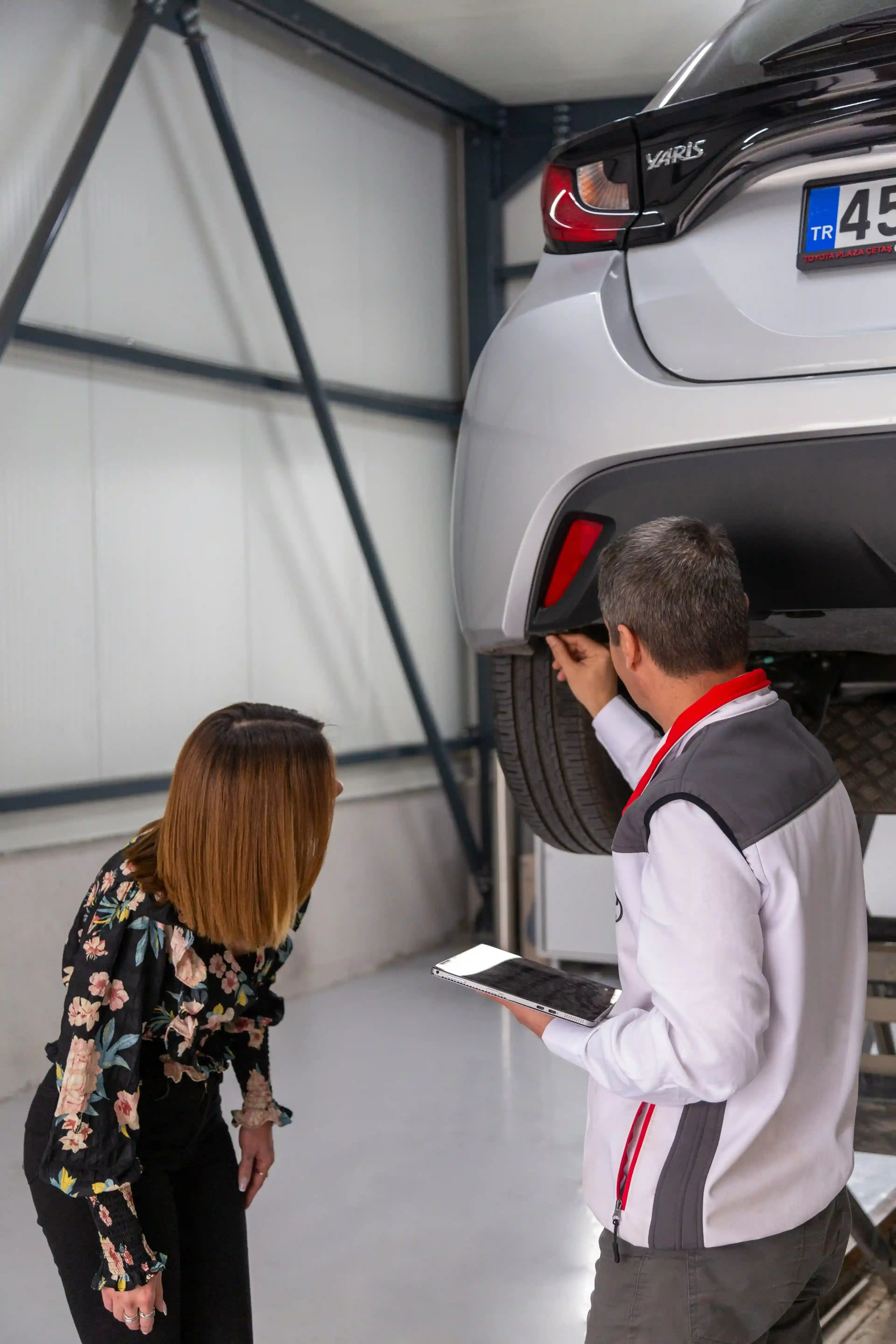
The Pre-Purchase Inspection: The Best $150 You Will Ever Spend
A pre-purchase inspection (PPI) is a mechanic’s check before buying. It reveals hidden issues and is the highest-value step to avoid costly surprises.