Accident History VIN Check

"Clean Title" doesn't mean accident-free. Review this vehicle's accident history.

  • Cross-referencing Accident History against State, Insurance, and Auction Records
  • 256-Bit Secure Encryption

What Accident History Means for the Vehicle

A vehicle's accident history affects its safety, its reliability, and its value in ways that are not always visible at inspection time.

Structural damage changes future crash performance

Modern vehicles are engineered with precise crumple zones and energy management geometry. A vehicle that has sustained significant structural damage and been repaired, even correctly, may not perform identically to an unrepaired vehicle in a subsequent collision. Accident history matters most on vehicles you actually drive, not ones you park.

Compromised Crash Safety

Hidden damage emerges over time

Frame misalignment causes uneven tire wear. Improperly repaired collision damage causes water intrusion. Electrical damage from an accident manifests as intermittent sensor failures months later. The effects of a poorly repaired accident are often not apparent at purchase but become expensive over the ownership period.

Delayed Damage

Accident history affects insurance costs

Some insurers rate vehicles with prior accident history differently, particularly for comprehensive and collision coverage. A vehicle with a prior total-loss designation that was rebuilt and resold may face coverage limitations.

Insurance Impact

Unreported accidents are common

A significant portion of minor-to-moderate accidents are never reported to insurance. The driver pays out of pocket for repairs to avoid a rate increase. No claim means no record in the insurance database. A clean accident history report is not a guarantee. It means no reported accidents were found, which is a different thing entirely.

Incomplete History

How to Spot It Manually

These physical signs survive a professional detail job and often persist even after body repair:

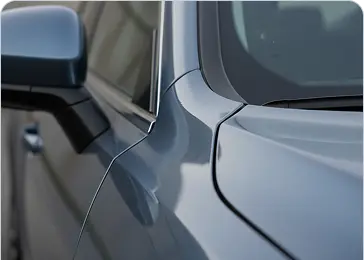
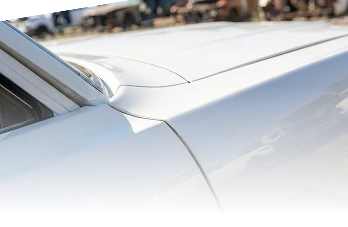
Panel gaps

Panel gaps

Sight down the length of the car from each corner in good lighting. Even a small collision that displaced a fender will leave a panel gap that is slightly wider or narrower than its pair on the opposite side. Gaps between the hood, fenders, doors, and rear quarter panels should all be consistent.

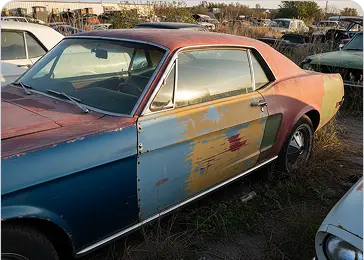
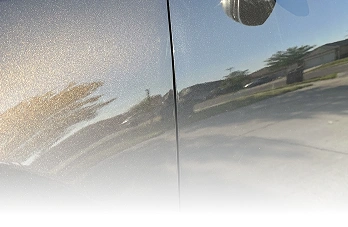
Paint matching

Paint matching

In direct sunlight, compare adjacent panels for color and finish consistency. A repainted panel will often show slightly different metallic flake orientation, a different texture, or a subtly different shade than panels painted at the factory. The difference is most visible at a shallow viewing angle.

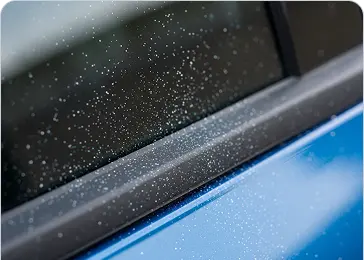
Overspray

Overspray

Check door seals, window gaskets, plastic trim pieces, and glass edges around any panel you suspect was repainted. Paint overspray on adjacent rubber and plastic surfaces is one of the most reliable indicators of post-factory panel work.

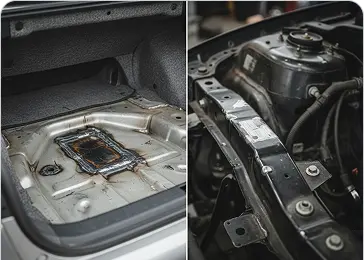
Trunk and engine bay

Trunk and engine bay

Open the trunk and inspect the rear floor pan and spare tire well for evidence of metal repair, including grinding marks, welding, or new metal. In the engine bay, look at the frame rails and strut towers for similar evidence of straightening or repair.

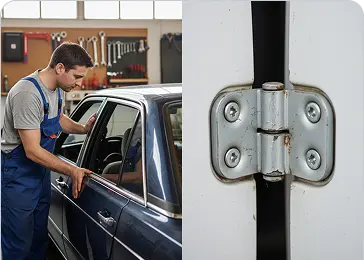
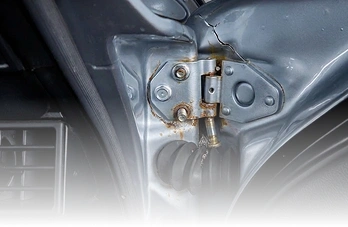
Door operation

Door operation

Open and close every door. Doors on a vehicle with prior structural damage may require more force to close, may not sit flush with the body, or may produce a different sound closing than they should. Inspect the door hinges for stress marks or replacement fasteners.

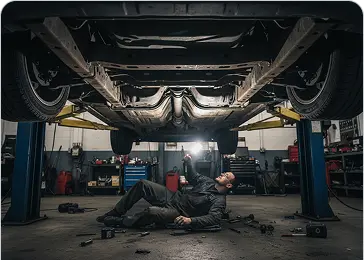
Underbody

Underbody

If possible, have the vehicle put on a lift for a pre-purchase inspection. Underbody damage, frame bends, and repair welds that are invisible from the exterior become apparent from below.

The "Event History" Check

Don't just list dates. Use our Event History check to connect title, insurance, auction, and registration records.

Event History Sample Data

2019 MAZDA-CX-7

Last reported color Mountain Air Metallic

Last reported mileage 109 miles in Apr 2007

2019 MAZDA-CX-7

Car History

Prior title and registration events

Record History

Insurance claim and auction records

The Intersection

Bumper connects records that may not appear on the current title.

How Bumper Checks for Accident History

Bumper's accident history data comes from multiple independent sources, which is why it catches records that single-source checks miss.

37 state-level agencies

Bumper aggregates accident data from state motor vehicle agencies in 37 states where such data is compiled and available digitally. The specific states are listed on bumper.com/about/data/. For states not in this list, Bumper relies on insurance and other data sources.

Insurance claim records

When a driver files an insurance claim after a collision, that claim enters the national insurance database. Bumper pulls from this data to surface reported collisions that may not have resulted in a title brand.

Auction records

Vehicles involved in significant accidents frequently pass through salvage or dealer auctions before repair and resale. Bumper's auction record data captures damage disclosures and condition reports that are part of the auction record.

Odometer cross-reference

Bumper cross-references odometer readings reported at each event in a vehicle's history. A sudden drop in reported mileage between events can indicate a rollback or suggest a gap in the ownership record consistent with an unreported period of repair.

Physical Signs of a "Accident" Car

1

Uneven panel gaps

2

Mismatched paint color or texture

3

Overspray on rubber trim and glass, and rippling or bubbling under paint at repair edges.

Has this car been in an accident?

Enter the VIN to check accident records from 37 state agencies, insurance claims, and auction data.

Run a free accident history check

Frequently Asked Questions

It means no reported accidents were found in the data sources Bumper checks. It does not mean the vehicle has never been in an accident. Private-party repairs, cash settlements, and accidents in states or time periods not covered by available data will not appear. A clean accident history report should be paired with a physical inspection by a qualified mechanic for the most complete picture.

Reported accidents are only part of the picture.

Bumper pulls from 37 state agencies, insurance records, and auction data to surface the most complete accident history available. Pair it with a pre-purchase inspection before you commit.

Run a Bumper Accident History Check