
A used car engine inspection is a systematic evaluation of an engine's condition, fluid health, and mechanical behavior designed to identify expensive problems — blown gaskets, oil leaks, transmission failure, cooling system damage — before they become your problem.
The engine is the single most expensive system in any vehicle. A failed engine in a $12,000 car costs $4,000–$8,000 to replace. A failed transmission costs $2,500–$5,000. Neither of these failures announces itself clearly in a listing, a detail job, or even a vehicle history report, but both can be easily concealed by a nefarious seller. If you know what to look for, issues with the engine and transmission are much easier to identify.
Most buyers open the hood, look at the engine, and think "looks good." That is not an inspection. This guide gives you a protocol that takes 20 minutes, requires no mechanical expertise, and catches the failures that cost buyers thousands of dollars every day.
This guide follows the exterior inspection in the sequence of The Forensic Buyer's Guide — the complete protocol for buying a used car without getting burned. It is one component of the complete used car inspection checklist.
Before you open the hood, run a VIN check on the vehicle. Maintenance records and service history on the report tell you whether this engine has been cared for — and gives you a mileage baseline to check against what the odometer currently shows.
Before You Start: The Cold Start Requirement
Direct answer: The single most important rule of a used car engine inspection is to see the engine started cold — from the previous night, not warmed up in the last hour. A cold start reveals problems that disappear after the engine reaches operating temperature. If a seller offers to "warm it up for you," treat that offer as a warning sign and insist on a cold start.
Here is why it matters. A cold engine starting from ambient temperature puts maximum stress on every system simultaneously — oil pressure builds from zero, metal components expand from cold, and any combustion irregularity is most visible before the engine settles into its operating parameters. An engine that has been running for twenty minutes has already masked its cold-start behavior.
If you arrive and the engine is already warm, ask the seller directly: "Was this car running recently?" If yes, either reschedule to see a cold start or factor that limitation into your evaluation. If the seller says that the reason is due to a bad battery, tell the seller you don’t mind seeing the car jump started. A seller who cannot accommodate a cold start for a $15,000 purchase is a seller worth being skeptical of.
Phase 1: The Visual Engine Bay Inspection
Direct answer: Inspect the engine bay visually before starting the car, checking for fluid leaks, corrosion, aftermarket modifications, missing components, and evidence of recent cleaning that might be concealing an active leak.
The Cleanliness Question
A spotlessly clean engine bay is not necessarily a good sign. Dealerships and private sellers sometimes pressure-wash engine bays before sale — a legitimate practice, but one that can also temporarily conceal active oil leaks, coolant seeps, and corrosion.
Look at the underside of the engine and the firewall behind it. Fresh oil residue on these surfaces suggests an active leak that was cleaned but not repaired. A faint oil smell under the hood combined with a clean engine is a reason to look more carefully, not less.
Corrosion and Battery Inspection
Look at the battery terminals. White or blue-green powdery buildup on the terminals indicates corrosion from electrolyte leakage — a sign of a battery approaching the end of its life. This is a $100–$200 near-term cost and a legitimate negotiating point.
Look at the ground straps — the braided metal cables connecting the engine block and body to the negative battery terminal. Corroded or broken ground straps cause electrical gremlins that are disproportionately expensive to diagnose.
Aftermarket Modifications
Note any components that appear aftermarket — non-factory air intakes, modified exhaust headers, performance chips, or altered wiring. Modifications are not inherently disqualifying, but they indicate the car was driven hard, may void remaining warranty coverage, and create unpredictable maintenance needs. Ask what modifications were made and why.
Phase 2: The Fluid Inspections
Direct answer: Check five fluids before starting the engine: engine oil (level and condition), coolant (level and color), transmission fluid (level and smell), brake fluid (level and color), and power steering fluid if present. Fluid condition is one of the most reliable indicators of how a vehicle has been maintained.
The Oil Cap Test — The Most Important Check in This Guide
Remove the engine oil cap. Look at the underside of the cap and the interior of the filler neck beneath it.
In a healthy engine, this surface is dark, slightly oily, and uniform. In an engine with a failing head gasket or cracked block, coolant mixes with the engine oil under pressure — producing a white, milky, or foamy residue that looks unmistakably like a cappuccino or mayonnaise. Engine sludge can also be present on the oil cap.
This is called the Oil Cap Test, and it is the single most important check in the engine bay. The repair for what this residue indicates — a blown head gasket or cracked block — costs $3,000–$8,000 minimum, and in many cases exceeds the value of the car itself.
Engine Oil — Dipstick Inspection
Pull the oil dipstick, wipe it clean with a rag or paper towel, reinsert it fully, and pull it again. Check three things:
Level: Oil should sit between the minimum and maximum marks. Significantly low oil — below the minimum mark — indicates either an active leak, excessive oil consumption (engine wear), or chronic owner neglect. All three are problems.
Color: New oil is amber. Properly used oil darkens to brown or black over time — this is normal. Milky or grey-tinged oil on the dipstick confirms the same coolant contamination identified by the oil cap test.
Consistency: Rub a small amount of oil between your fingers. It should feel smooth and slippery. Gritty oil — you can feel particles — indicates metal contamination from internal engine wear.
Coolant — Level and Condition
Check the coolant level in the plastic reservoir — do not open the radiator cap on a warm engine. Pressurized coolant systems can spray scalding fluid if opened when hot.
Coolant should be at or near the marked level. Its color should match the type specified for the vehicle — typically green, orange, pink, or blue depending on manufacturer and age. Brown or rust-colored coolant indicates the cooling system has not been flushed on schedule and internal corrosion is occurring.
An empty or near-empty coolant reservoir on a car that supposedly has been maintained is a red flag regardless of color.
Transmission Fluid
On vehicles with a transmission dipstick (many modern vehicles have sealed transmissions without one — check the owner's manual), pull and inspect the fluid using the same technique as engine oil.
Healthy automatic transmission fluid is bright red and slightly translucent. Dark brown or black fluid indicates overheating or severe degradation. A burnt smell — like charred rubber — is a definitive sign of transmission distress.
Manual transmission fluid is checked differently and typically requires raising the vehicle — add this to the pre-purchase inspection list if manual transmission condition is a concern.
Brake Fluid
Locate the brake fluid reservoir — typically a small translucent plastic container near the firewall on the driver's side. The level should be between the min and max marks. Brake fluid is hygroscopic — it absorbs moisture over time — and darkens as it ages. Very dark, almost black brake fluid indicates it has not been changed in years and has degraded performance.
Phase 3: The Cold Start Inspection
Direct answer: Watch and listen to the engine start from cold, observing exhaust smoke color, idle quality, and warning light behavior. Blue or grey exhaust smoke indicates oil burning. White smoke that does not clear within 60 seconds indicates coolant entering the combustion chamber. A rough idle that persists after warm-up indicates engine misfires requiring diagnosis.
Reading the Exhaust Smoke
Stand behind the vehicle and observe the exhaust as the engine starts and warms up.
Brief white condensation: Normal on cold days. This is water vapor from the exhaust system condensing in cold air and dissipates within 30 seconds as the system warms.
Blue or grey smoke: The engine is burning oil. Oil is entering the combustion chamber through worn piston rings or valve seals. This indicates significant engine wear. Blue smoke may appear briefly on startup in an aging engine — ongoing blue smoke after warm-up is more serious.
White smoke that persists: Coolant is entering the combustion chamber. This is the combustion manifestation of the same head gasket failure identified by the oil cap test. If you see persistent white smoke and milky oil, you have confirmed the same diagnosis from two independent observations.
Black smoke: The engine is running rich — burning too much fuel relative to air. Common causes include a faulty oxygen sensor, mass airflow sensor, or fuel injector. Less catastrophic than coolant or oil burning, but still requires diagnosis and repair.
Exhaust odor: Even if there isn’t smoke coming from the exhaust, the exhaust should be odorless, so any smells emanating from the tailpipe could suggest a problem. A sweet smell could point toward coolant in the exhaust, a burning plastic smell could suggest the engine is burning oil, and a rotten egg smell shows that the catalytic converter(s) are, or are about to be, bad.
Reading the Idle
After startup, listen to the idle quality with the hood open.
A healthy engine idles smoothly and consistently at 600–800 RPM. A cold engine may idle slightly higher — 900–1,100 RPM — for the first minute as the choke opens. This is normal and it should smooth out as the engine warms.
Rough idle: An irregular, lumpy, or bouncy idle indicates engine misfires — cylinders not firing consistently. Causes range from a simple spark plug replacement ($50–$200) to failed fuel injectors ($300–$600 per injector) to internal engine damage.
Ticking or tapping: A light ticking that disappears after oil pressure builds within five seconds of startup is normal in some engines. Ticking that persists after startup indicates either low oil pressure, worn valve train components, or collapsed lifters — repairs ranging from $200 to $2,000 depending on cause.
Knocking: A deep, rhythmic knocking from deep within the engine — sometimes called rod knock — indicates a failing connecting rod bearing. This is catastrophic internal engine damage. A knocking engine needs replacement, not repair.
Phase 4: Belts, Hoses, and Leak Check
Direct answer: After the engine has run for five minutes, inspect belts and hoses for wear and check beneath the car for active fluid drips. A worn serpentine belt costs $100–$200 to replace before it fails — after it fails, it typically takes the power steering, alternator, water pump, and air conditioning with it.
Belt Inspection
Locate the serpentine belt — the single wide belt that drives multiple engine accessories on most modern vehicles. With the engine off, examine the belt surface for:
- Cracking: Small cracks across the ribs of the belt indicate aging rubber. Fine surface cracking is acceptable. Deep cracking that reaches the belt's cords is not.
- Fraying: Frayed edges indicate misalignment or contact with a worn pulley.
- Glazing: A shiny, hard surface on the belt ribs indicates overheating or slipping. A glazed belt cannot grip pulleys correctly.
If the vehicle has a timing belt (check the owner's manual — many modern engines use a timing chain instead), ask when it was last replaced. Timing belt replacement intervals are typically 60,000–100,000 miles. A timing belt that fails destroys the engine. Its replacement cost ($300–$800) is a legitimate factor in price negotiation if it is due or overdue.
Hose Inspection
Squeeze the major coolant hoses — the large hoses connecting the radiator to the engine. Healthy hoses are firm and slightly flexible. End-of-life hoses are either hard and brittle (squeeze them and they feel rigid, like hard plastic) or soft and spongy (they collapse under light finger pressure).
A burst coolant hose leaves you stranded and can cause rapid engine overheating. Hose replacement costs $50–$150 per hose — use the condition of aging hoses as a negotiating point.
The Active Leak Check
After the engine has run for five minutes, look under the car — both at the ground beneath it and at the underside of the engine. Active leaks produce drips or wet surfaces.
A small seep from an aging gasket — a faint wetness rather than a drip — is common on high-mileage vehicles and manageable. A sustained drip of any fluid is a repair item. A puddle forming under the car during your inspection is a significant problem.
Note the color of any fluid you find: oil is brown to black, coolant is green, orange, or pink, transmission fluid is red, and brake fluid is clear to light yellow. Each color points to a different system.
Phase 5: Transmission — The Road Test Indicators
Direct answer: Transmission condition is best assessed during the test drive, not in the engine bay. Listen and feel for smooth, prompt gear changes, no slipping between gears, no shuddering during acceleration, and no delay when engaging Drive or Reverse from Park.
The transmission dipstick tells you the fluid's condition. The road tells you the transmission's condition. Here is what to feel for during the used car test drive.
Automatic Transmission Checks
Engagement test: From a cold start, shift from Park to Drive and then from Drive to Reverse. Each engagement should be felt within one second — a firm but smooth "clunk" into gear. A delay of more than two seconds before the car moves, or no movement at all, indicates a slipping transmission.
Upshift quality: As you accelerate from a stop through the lower gears, each upshift should be smooth and prompt. A shudder during upshift — a brief vibration felt through the seat — indicates transmission clutch pack wear. A hard, jolting shift indicates pressure regulation problems.
The slip test: Accelerate moderately to 40mph on a flat road, then release the accelerator. The engine RPM should drop with the car's speed. If the engine RPM rises while the car's speed stays flat or decreases — the engine is racing but the car is not accelerating — the transmission is slipping. This is a significant mechanical failure.
Kickdown response: At 40mph, press the accelerator firmly. The transmission should downshift within half a second and the car should accelerate promptly. A long delay before downshifting, or a transmission that hunts between gears without committing, indicates a failing transmission control system.
When to Call in a Professional
The checks in this guide catch the most common and most expensive engine and transmission problems. They do not catch everything.
A professional Pre-Purchase Inspection (PPI) puts the car on a lift and gives a trained mechanic full access to what you cannot see from ground level — compression testing, cylinder leakdown testing, transmission pan inspection, and a complete undercarriage assessment. These tests can identify an engine that is technically running but is two months from failure.
If the engine and fluid checks in this guide come back clean but you remain uncertain, or if you are buying a higher-value vehicle where the inspection cost is a small percentage of the purchase price, a PPI is the right next step.
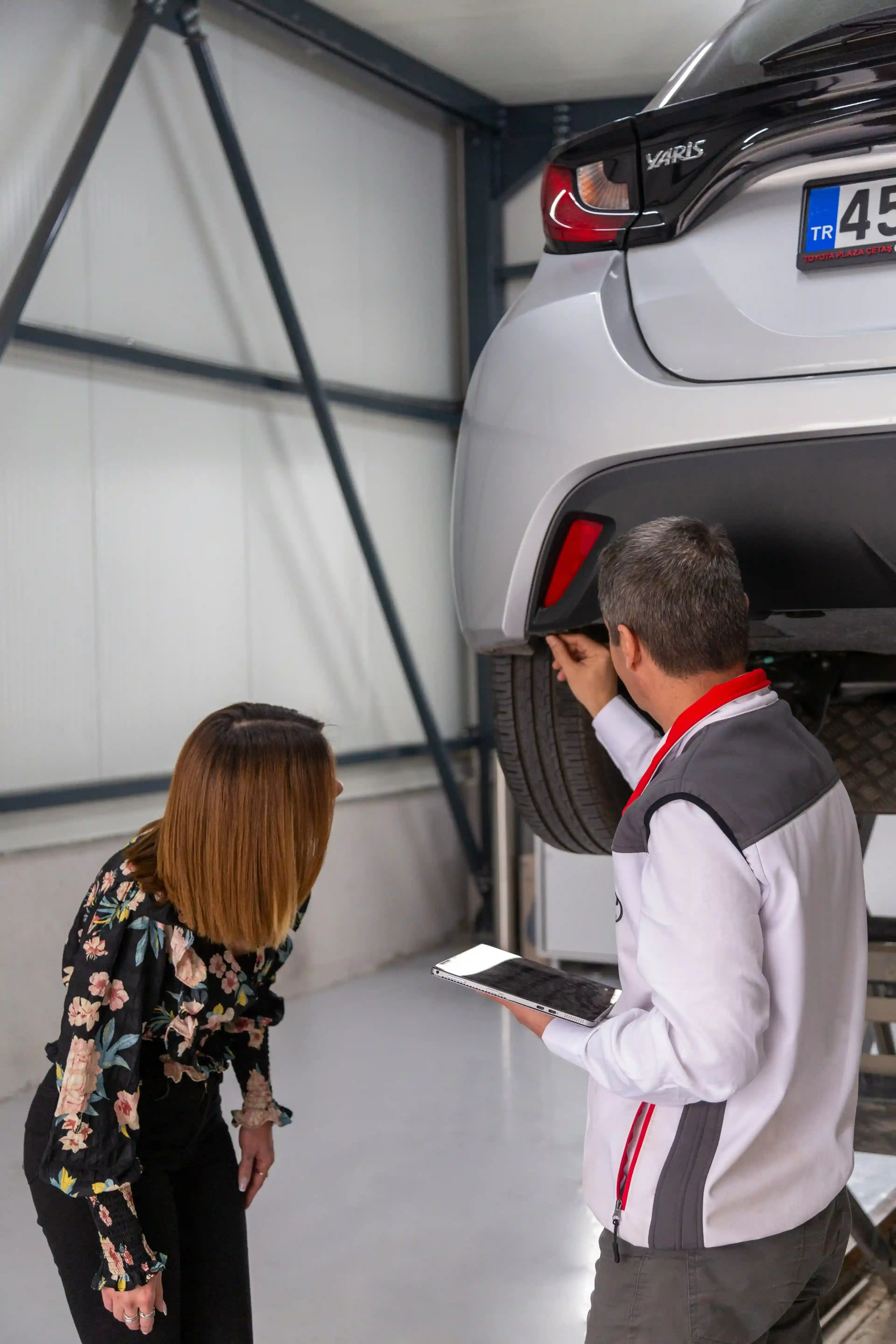
The Pre-Purchase Inspection: The Best $150 You Will Ever Spend
A pre-purchase inspection (PPI) is a mechanic’s check before buying. It reveals hidden issues and is the highest-value step to avoid costly surprises.
Used Car Interior Inspection: The Complete Guide to What the Cabin Reveals
Interior condition reveals wear, safety issues, and hidden damage. Learn what to check to avoid risk and assess true value before buying.