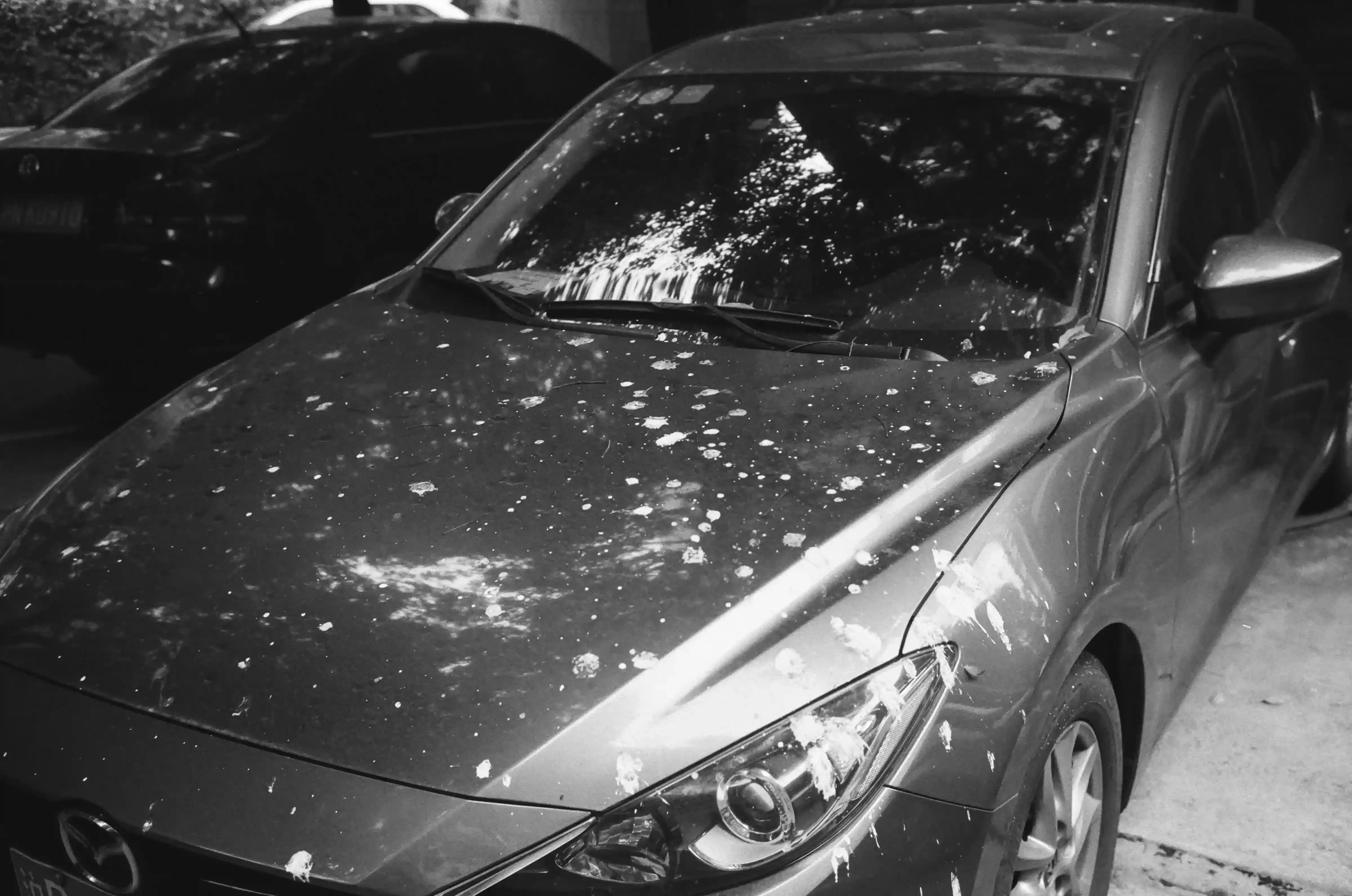
Hail damage is one of the most common — and most commonly concealed — defects in the used car market. A single severe hailstorm can damage thousands of vehicles simultaneously. Many of those vehicles are repaired and resold. Some are repaired well. Many are not. And some are sold with undisclosed damage that a cursory inspection misses entirely.
The challenge with hail damage is that it sits in a gray zone that some sellers may exploit. Unlike flood damage or a salvage title, hail damage does not automatically brand a vehicle's title or appear in a history report unless an insurance claim was filed. A car can have 200 hail dents, receive a cheap cosmetic repair, and show up in a listing described as "clean" — technically and legally, that description is not false.
This guide gives you the inspection protocol to find hail damage that was repaired, hail damage that was not repaired, and the framework to decide whether a hail-damaged car is worth buying at all — and at what price.
This guide is part of The Forensic Buyer's Guide and works alongside the broader used car inspection checklist and exterior inspection guide.
What Hail Damage Actually Does to a Car
Direct answer: Hail damage produces rounded dents — typically 10mm to 40mm in diameter — concentrated on horizontal surfaces exposed to falling ice: the hood, roof, trunk lid, and tops of front fenders. The dents do not crack or crease the paint in most cases, which is why hail damage is less visually obvious than collision damage and why it is frequently missed by buyers who do not know the specific inspection technique.
The Distribution Pattern
Hail falls vertically. This means hail damage concentrates on horizontal surfaces and is largely absent from vertical surfaces like doors and quarter panels — unless the storm included high winds that drove the hail at an angle.
If you see uniform denting across the hood and roof but not on the doors, you are likely looking at hail damage. If you see denting on doors and quarter panels as well, the storm was wind-driven or the damage has a different cause.
Understanding this distribution pattern helps you distinguish hail damage from other types of denting — shopping cart impacts, parking lot door dings, and vandalism all produce different patterns on different surfaces.
The Two Types of Hail Damage Situations You Will Encounter
Disclosed, professionally repaired: The seller acknowledges the damage, an insurance claim was filed, and the car was repaired using Paintless Dent Repair (PDR) by a qualified technician. This is the best case. Professional PDR on moderate hail damage can restore a vehicle to near-factory condition. The insurance record exists.
Undisclosed, cheaply repaired or unrepaired: The damage was either never reported to insurance, was repaired cosmetically without proper PDR technique, or was partially repaired and partially concealed with filler and respray. This is what you are primarily inspecting for. The seller may not volunteer this information. The inspection protocol below is how you find it anyway.
The Hail Damage Inspection Protocol
Step 1: The Reflection Test
Direct answer: The most reliable technique for detecting hail damage — including professionally repaired damage — is the reflection test. Look down the length of each horizontal panel at a shallow angle while finding the reflection of a straight line in the panel's surface. Hail dents that have been repaired with PDR usually leave microscopic surface distortions that appear as waviness in straight-line reflections invisible to direct viewing.
How to perform the reflection test:
Find a straight line in your environment, such as a building edge, a light fixture bar, a door frame, a power line. Position yourself at the front corner of the car and crouch slightly so you are looking at a shallow angle down the length of the hood, with the straight line reflected in the panel surface.
Move slowly from one end of the panel to the other, keeping your eye on the reflected line. In an undamaged panel, the reflection is perfectly straight. In a panel with hail dents — repaired or unrepaired — the reflected line appears wavy, kinked, or rippled at each dent location.
The reflection test works because the human eye is extraordinarily sensitive to deviations in a straight line — far more sensitive than it is to subtle three-dimensional surface irregularities in a curved panel. A dent that is completely invisible to direct viewing from above will produce a clearly visible distortion in the reflected line.
Apply the reflection test to:
- Hood (front to back and side to side)
- Roof (if accessible — stand on the door sill carefully, or use a step stool)
- Trunk lid
- Top surfaces of front fenders
- Top surface of the rear bumper cover
Step 2: The Direct Visual Inspection
In addition to the reflection test, inspect horizontal panels in direct raking light — sunlight at a low angle, or a handheld flashlight held at a shallow angle to the panel surface. Raking light creates shadows in dents that are invisible under overhead lighting or overcast conditions.
Move the light source slowly across the hood and roof, watching for the shadow pattern of small rounded dents. Hail dents cast a characteristic shadow — a small dark crescent on one side and a bright highlight on the other — that is distinct from random dings or scratches.
Step 3: Checking for Concealed Repairs
Low-quality hail damage repair uses body filler (Bondo) over dents rather than proper PDR technique. This is cheaper and faster but produces a result that looks correct initially and fails within one to three years as the filler cracks under thermal expansion.
Use the magnet test — the same technique from the exterior inspection guide — on every horizontal panel. Slide a small magnet slowly across the hood, roof, and trunk lid. The magnet maintains consistent grip over steel. Over body filler, it noticeably weakens or releases. Keep in mind the magnet test doesn’t work on aluminum body panels.
Finding body filler on a horizontal panel in a hail damage pattern is a sign that damage was concealed rather than properly repaired — a meaningful distinction for durability and resale value.
Step 4: The History Report Cross-Reference
Run a vehicle history report and look for two things relevant to hail damage:
Insurance claims: An insurance claim filed for hail damage will appear in the report's accident and damage history. A claim record is actually reassuring in the hail damage context — it means the damage was disclosed to insurance, a repair was funded through the claims process, and the repair was likely performed by a licensed body shop to insurance standards.
Geographic history: A car that spent several years in Texas, Oklahoma, Colorado, Kansas, or Nebraska — states that sit in Tornado Alley and experience frequent severe hailstorms — has statistically higher hail exposure than a car from the Pacific Northwest or New England. Geography does not confirm damage, but it informs how carefully to apply the inspection protocol.
What Is Paintless Dent Repair and Is It Any Good?
Direct answer: Paintless Dent Repair (PDR) is a repair technique in which trained technicians use specialized metal rods and picks to massage dents out from behind the panel without removing paint or applying filler. When performed correctly by a qualified technician on appropriate damage, PDR is the superior repair method, since it preserves the factory paint, produces no detectable surface difference, and maintains full structural integrity. The key qualifier is "performed correctly on appropriate damage."
When PDR Works
PDR works well on:
- Dents that have not cracked or creased the paint
- Dents on steel panels (aluminum requires more skill and has more limitations)
- Dents with sufficient access behind the panel for the technician's tools
- Hail dents smaller than approximately 40mm in diameter
A professional PDR repair on moderate hail damage — distributed small dents on the hood and roof with intact paint — is a legitimate repair that does not meaningfully affect the vehicle's value, safety, or durability. A car with disclosed, professionally repaired hail damage and an insurance record is not necessarily a car to avoid.
When PDR Does Not Work
PDR is not appropriate for:
- Dents with cracked, chipped, or creased paint — the paint must be addressed separately
- Very large dents (over 50mm) that require panel replacement
- Dents on edges, body lines, or areas with insufficient tool access
When PDR is not appropriate but is attempted anyway — or when a cheap PDR technician pushes the technique beyond its limits — the result is a panel that looks repaired but has stress fractures in the paint that will crack and peel within a year or two.
The reflection test catches both good and poor PDR. Good PDR produces no distortion in the reflected line. Poor PDR produces a distortion that is different in character from an unrepaired dent but still visible — a flatter, broader distortion rather than the sharp kink of an unrepaired dent.
Should You Buy a Car with Hail Damage?
Direct answer: Whether to buy a car with hail damage depends on three factors: whether the damage is disclosed, whether it was professionally repaired, and whether the asking price reflects the damage accurately. Disclosed, professionally repaired hail damage with an insurance record is a legitimate value opportunity — the car's function and safety are unaffected and the price discount can be substantial. Undisclosed or poorly repaired hail damage at a non-discounted price is a trap.
The Value Impact of Hail Damage
Hail damage reduces a vehicle's market value in proportion to its severity and repairability.
Minor hail damage (small, distributed dents on hood and roof, paint intact, professionally repaired): 5–10% value reduction from comparable undamaged vehicles.
Moderate hail damage (significant denting across multiple panels, some paint cracking, professionally repaired): 10–20% value reduction.
Severe hail damage (extensive denting including vertical panels, significant paint damage, may result in total loss designation): 30–50% or more value reduction, and the title may be branded as salvage or rebuilt depending on state.
If a seller is pricing a hail-damaged car at market rate for an undamaged equivalent, the asking price is wrong. The discount should be negotiated explicitly based on the documented damage and repair quality.
The Safety Question
Hail damage does not typically affect a vehicle's structural safety. Unlike collision damage that may compromise the frame or crumple zones, hail impacts are distributed low-energy strikes that dent sheet metal without affecting structural steel. A car with hail-dented sheet metal absorbs a collision the same way it did before the storm.
The one exception is hail damage severe enough to crack the windshield or damage other glass. Replaced glass could have come from a third-party supplier rather than from the OEM, but the biggest issue from glass replacement is that it could lead to water leaks.
The Negotiation Framework
If the inspection confirms hail damage — disclosed or undisclosed — use this framework:
- Get a PDR estimate from an independent body shop before negotiating. This gives you a specific dollar figure for the repair cost.
- Present the estimate to the seller as a factual data point, not a complaint.
- Request the asking price be reduced by the repair cost, or ask the seller to have the repair completed before closing.
- If the damage is undisclosed, the discovery itself changes the negotiating dynamic — you now have evidence that the seller's representation of the vehicle was incomplete.

Car Negotiation Scripts: Word-for-Word Lines That Could Save You Money
Car negotiation scripts for real scenarios. Learn exactly what to say, using facts like VIN reports and inspections to keep leverage on your side.