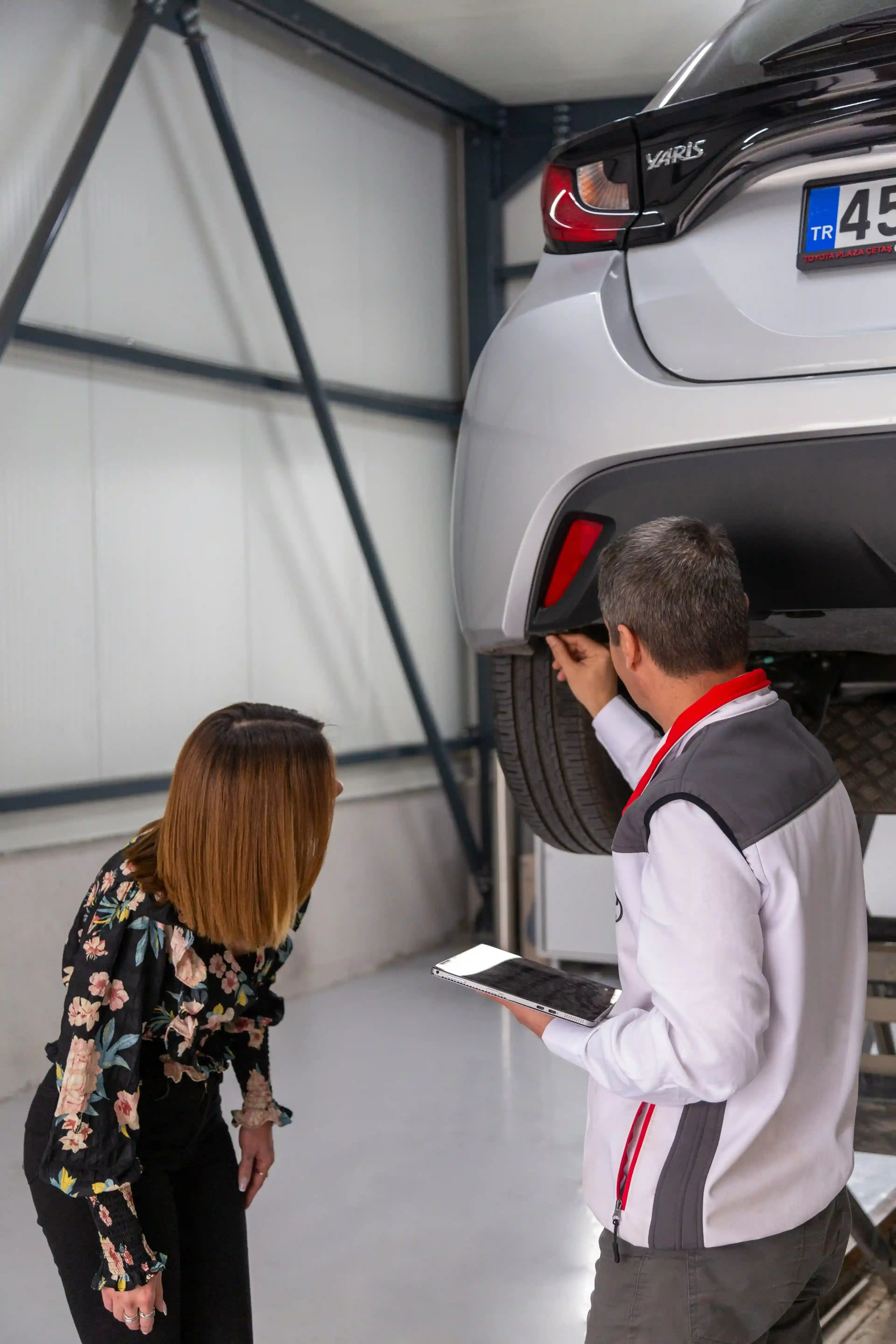
A pre-purchase inspection (PPI) is an independent mechanical evaluation of a used vehicle performed by a qualified mechanic of your choosing — not the seller's, not the dealership's — before you commit to buying. More than just a visual inspection, it puts the car on a lift, gives a trained professional access to everything you cannot see from ground level, and produces a written report of every finding.
These professional inspections cost $100–$150, and it usually takes 45 minutes to an hour. It is the single highest-return action available to any used car buyer, and it is the most consistently skipped step in the entire purchase process.
The irony is understandable. By the time a buyer reaches the PPI stage, they have already run a vehicle history report, completed the physical inspection, and done the test drive. The car has passed everything. Enthusiasm is high. The PPI feels like an obstacle and added expense between you and a car you have already decided you want.
That feeling is exactly when the PPI is most important. The checks you performed in the complete used car inspection checklist and on the test drive are comprehensive, but they have limits. You cannot see the underside of the vehicle without a lift. You cannot perform a compression test without equipment. You cannot read stored fault codes without a scan tool. A professional PPI covers all of this, and it covers it with trained eyes that have seen every trick, every repair shortcut, and every category of concealed damage in a career of inspecting used vehicles.
This guide is part of The Forensic Buyer's Guide — the complete protocol for buying a used car without getting burned.
What a Pre-Purchase Inspection Covers
Direct answer: A comprehensive pre-purchase inspection covers the engine and drivetrain, transmission, brakes, suspension and steering, exhaust system, frame and undercarriage, all fluid levels and conditions, tires, electrical systems, and a full OBD2 scan for stored and pending diagnostic fault codes. A qualified mechanic performing a PPI on a lift sees components that are physically inaccessible to a buyer conducting a ground-level inspection.
Under the Hood
The mechanic re-examines everything in the engine bay with professional tools and experience. This includes a cylinder compression test — a direct measurement of each cylinder's ability to seal combustion gases, which reveals worn piston rings, failing valves, and head gasket integrity with a specificity that no visual check can match. An engine that looks and sounds healthy may have a cylinder producing 40% less compression than the others — a finding that predicts significant engine work within 20,000–30,000 miles.
The mechanic also performs a full OBD2 diagnostic scan, reading all stored fault codes — including codes that have been cleared to turn off a warning light but remain in the system as historical records. A seller who cleared a check engine light before showing the car cannot clear the stored fault history or reset the readiness monitors. That history is still there, and a scan tool reads it.
How to Inspect a Used Car Engine and Transmission: The Complete Under-Hood Guide
Engine inspection reveals leaks, wear, and costly failures. Learn how to assess condition and avoid expensive repairs before buying.
The Undercarriage — What the Lift Reveals
This is the primary value of the PPI over any ground-level inspection. On a lift, the mechanic can see and access:
- Frame and subframe: Collision damage that was cosmetically repaired but never structurally corrected leaves evidence on the frame rails — weld marks, straightening marks, kinks in the metal, or replacement sections that do not match the factory finish. A ground-level inspector might miss all of this. A mechanic on a lift with a flashlight and experience will not.
- Suspension components: Each ball joint, control arm bushing, tie rod end, and sway bar link can be physically grabbed and stressed to test for play. A component with excessive play — a ball joint, for example, that moves noticeably when pushed — indicates wear that is approaching failure. This test is impossible without a lift and cannot be replicated during a test drive.
- Brake lines and fuel lines: Rubber brake lines and metal fuel lines run beneath the vehicle and are invisible from ground level. A collapsed brake hose — one that has failed internally and is restricting fluid flow to one caliper — produces a brake pull that seems like a caliper problem but originates in the line. Corroded or cracked fuel lines are a fire risk. Neither is detectable without getting under the vehicle.
- Exhaust system: The full exhaust system from the manifold to the tailpipe, including catalytic converters and mufflers. Leaks, cracks, and patch repairs are visible from beneath. A failing catalytic converter costs $800–$2,500 to replace — a finding that belongs in the negotiation before purchase, not in your lap after.
- Oil leaks: From beneath the vehicle, the mechanic can identify exactly where an oil leak originates — valve cover gasket, rear main seal, oil pan gasket, or front crankshaft seal. Each has a different repair cost and urgency. A rear main seal replacement on some vehicles requires removing the transmission — a $1,000–$2,500 repair. Knowing before purchase is very different from discovering it after.
- Fluid leaks of all types: Transmission fluid, differential fluid, power steering fluid, coolant, and brake fluid leaks are all visible from beneath in ways they are not from above.

How to Identify Flood Damage in a Used Car: The 7-Step Inspection Protocol
Flood-damaged cars may look fine but hide corrosion and costly failures. Learn risks, signs, and why a VIN check is critical before buying.
Tires and Brakes — Professional Assessment
The mechanic re-examines the tires and brakes with the wheel off the ground, allowing access to the inner sidewall, the full rotor face, and the caliper slide pins. A caliper that is seizing on its slide pins — binding rather than releasing cleanly — may stop the car adequately during a test drive but will negatively affect braking performance and may cause damage to other brake components. This is not always detectable during a driving evaluation. It is obvious to a mechanic with the wheel in the air.
What a Pre-Purchase Inspection Does Not Cover
Direct answer: A pre-purchase inspection is not a warranty and does not guarantee the vehicle's future reliability. It is a point-in-time assessment of the vehicle’s current condition. Intermittent electrical faults that are not present on the day of the inspection, future component failures that are not yet showing measurable wear, and cosmetic issues already documented in the visual inspection are typically outside the scope of a PPI report.
A PPI also does not replace the digital forensics phase of the inspection. The mechanic is evaluating the physical vehicle — they are not researching the vehicle's title history, geographic registration record, or insurance claim history. That work is done by running a VIN check before the appointment.
The two are complementary, not interchangeable. The report tells you what happened to this car on paper. The PPI tells you what it looks like in metal.
How to Arrange a Pre-Purchase Inspection
Step 1: Find the Right Mechanic
The mechanic must be independent with no connection to the seller, the dealership, or anyone involved in the transaction. A dealership's service department — including a “multi-point used car inspection — is not an appropriate PPI provider for a vehicle that dealership is selling. This sounds obvious but sellers occasionally suggest their own service department as a "convenience." Decline.
Sources for independent mechanics:
AAA Approved Auto Repair: AAA maintains a directory of approved shops that meet defined standards for equipment and technician certification. AAA members receive discounts at many locations.
ASE-Certified shops: The National Institute for Automotive Service Excellence certifies mechanics who pass standardized competency tests. An ASE-certified mechanic has demonstrated baseline knowledge. Find certified shops at ase.com.
RepairPal: An online directory of vetted repair shops with verified customer reviews and fair-price estimates. Useful for finding shops in an unfamiliar area.
Personal referrals: A mechanic your family or friends have used for years and trust is often the best option available — you know their honesty and their standards from direct experience.
What to ask when calling:
- Do you perform pre-purchase inspections?
- What does your inspection include?
- Do you provide a written report?
- How much do you charge?
- How long does it take?
A shop that hesitates to describe what their inspection includes or will not commit to a written report is not the right shop. You need documentation, not a verbal opinion.
Step 2: Get the Seller's Agreement
Ask the seller to allow you to take the car to an independent mechanic for inspection before finalizing the purchase. Frame this as a standard part of your buying process — because it is.
A legitimate seller — private or dealer — will agree. A seller who refuses should be treated with significant skepticism. Their refusal is information: they know something about this vehicle that they do not want a professional mechanic to find.
The exact language to use: "Before I can commit to purchasing, I need to have the car inspected by my mechanic. It takes about an hour. Can we arrange that?"
If the seller claims they have had multiple other interested buyers and cannot hold the car for an inspection, that is a pressure tactic. A car worth buying will still be available after a one-hour inspection. If it is not, it was not worth buying at that price.
Step 3: Attend the Inspection
Be present during the PPI if at all possible. A mechanic who can walk you around the vehicle and point to specific findings while the car is on the lift gives you a fundamentally different level of understanding than a written report you read later.
When the car is on the lift, ask the mechanic to show you whatever they find. Ask them to explain the significance of each finding — is this something that needs immediate repair, something to monitor, or something within normal parameters for the vehicle's age and mileage? A good mechanic will take the time to explain, because their job in this context is to quality or disqualify your purchase decision, not to sell you a repair.
Take notes. Photograph anything the mechanic points to. This documentation becomes your negotiating record.
Step 4: Get It in Writing
The inspection report must be written. A verbal summary is useful but not sufficient. You need a document that lists every finding with the mechanic's assessment of severity and estimated repair cost. This written report is what you bring to the negotiating table.
How to Use PPI Findings in Negotiation
Direct answer: Use PPI findings as factual, specific, documented leverage — not as complaints or accusations. Present each finding with the mechanic's written assessment and estimated repair cost, and request that the asking price be reduced by the documented cost, or that the seller repair the items before closing. A written report from an independent professional is the strongest negotiating position a buyer can hold.
The Three Outcomes of PPI Findings
Clean PPI: No significant findings. The car's condition matches the asking price. Proceed to purchase with confidence — or use the clean report as confirmation that the seller's asking price is fair. A clean PPI is not an argument for a lower price. It is confirmation that you are not overpaying.
Minor findings: The PPI identifies items that need attention within the next 12 months — a leaking valve cover gasket, rear brake pads at 40%, a cabin air filter that needs replacement. These are negotiating points, each with a specific repair cost. Total the repair costs and present the total as a documented basis for a price reduction. You are not negotiating subjectively — you are presenting invoiceable repair costs.
Significant findings: The PPI identifies a major defect — a failing catalytic converter, significant frame repair evidence, a transmission with stored fault codes, an engine compression test showing a weak cylinder. These findings change the fundamental question from "how much should I pay for this car" to "should I buy this car at all." A major PPI finding is either a walk-away event or a very large price reduction — not a small negotiation around the edges.
The script for presenting findings: "The inspection found [specific finding]. My mechanic estimates the repair at [specific dollar amount]. I would like to adjust my offer to reflect that cost, or alternatively, I would ask you to have the repair completed before we close."

Car Negotiation Scripts: Word-for-Word Lines That Could Save You Money
Car negotiation scripts for real scenarios. Learn exactly what to say, using facts like VIN reports and inspections to keep leverage on your side.
When a PPI Is Most Critical
Every used car purchase benefits from a PPI. The following situations make a PPI non-negotiable.
High-mileage vehicles: The higher the mileage, the more components are approaching end of life simultaneously. A PPI on a 120,000-mile vehicle is not looking for one problem — it is producing a maintenance roadmap for the next owner.
Luxury and European vehicles: Maintenance and repair costs on Mercedes, BMW, Audi, Porsche, Land Rover, and Volvo vehicles are significantly higher than mainstream brands. A catalytic converter on a BMW costs three times what the same repair costs on a Toyota. A PPI on these vehicles pays for itself on the first finding.
Vehicles with any prior accident history: Any vehicle with a reported accident, even a minor one, benefits from professional structural assessment. Collision repair quality varies enormously — from factory-correct to cosmetically adequate but structurally compromised.
Vehicles from private sellers: Private sellers have no licensing obligations, no implied warranty requirements, and often no ability to stand behind the vehicle after the sale. A PPI is the only professional backstop available in a private party transaction.
Any vehicle over $15,000: At this price point, the PPI cost is less than 1% of the purchase price. The potential return — discovering a $2,000 repair before purchase rather than after — is a 13:1 return on the inspection cost minimum.