
Before You Start: The Test Drive Rules
Rule 1 — Drive alone or with one quiet companion. A salesperson in the passenger seat is a distraction tool. Their job during the test drive is to fill silence, redirect your attention, and prevent you from focusing on what the car is doing. If the seller insists on accompanying you, that is their right — but keep conversation minimal and focus on the car. If you can negotiate a solo drive, do it.
Rule 2 — Drive the route you choose, not the route they suggest. Dealers have preferred test drive loops — short, smooth, familiar roads that minimize the chance of discovering problems. You want the opposite: a route that includes highway speed, a rough surface, a sharp turn, and a hard braking event. Plan your route before you arrive.
Rule 3 — Start in silence. Turn off the radio immediately. Mechanical problems communicate through sound and feel. You cannot hear a transmission shudder over music. You cannot feel a steering pull if you are not paying attention. The radio goes off for the duration of the inspection drive.
Rule 4 — The car must be cold. If the engine has been running for more than a few minutes before your drive, ask to reschedule or factor the limitation into your evaluation. A cold start reveals problems a warmed engine hides. If the seller says they "just warmed it up for you," understand what that means.
Rule 5 — 20 minutes minimum. Anything shorter is not a test drive. You need highway speed, varied road surfaces, multiple gear changes, a braking test, and time for the engine to reach full operating temperature. Budget 30 minutes to do it properly.
Category 1: Engine Behavior
Direct answer: Assess engine behavior during the test drive by observing cold start quality, idle smoothness, acceleration response, and behavior at sustained highway speed. Problems that do not appear during the static engine inspection — misfires that emerge under load, hesitation under hard acceleration, overheating at sustained speed — reveal themselves on the road.
1. Cold Start Observation
If you are beginning the test drive from a cold engine, observe the startup as described in the engine and transmission inspection guide. Watch for smoke color, listen for rough idle, and note how quickly the idle settles. A rough idle that clears within 60 seconds is acceptable on a cold engine. One that persists after warm-up is not.
2. Acceleration Response
From a stop, accelerate moderately — not aggressively — through the lower gears. The power delivery should be smooth and linear. Hesitation, stumbling, or a flat spot where the engine temporarily loses response indicates a fueling, ignition, or throttle body issue. A brief hesitation on a cold engine warming up is sometimes acceptable — the same hesitation after the engine is warm is not.
3. Hard Acceleration Test
In a safe location — an on-ramp or an empty stretch of road — press the accelerator firmly to approximately 75% throttle and hold it through two to three gear changes. The engine should pull strongly and consistently. A misfire that only appears under load — a brief stumble or power loss during hard acceleration that does not appear at moderate throttle — indicates a cylinder not contributing consistently under pressure.
4. Highway Cruise
At 65–70mph in top gear, hold a steady speed and pay attention to the engine. It should be smooth, quiet, and undemanding at highway cruise. Any vibration through the seat or steering wheel at sustained highway speed indicates drivetrain imbalance — a worn driveshaft, unbalanced wheel, or failing CV joint. Any roughness in the engine at cruise speed indicates an issue with combustion consistency.
5. Temperature Gauge Behavior
Watch the temperature gauge throughout the drive. It should rise steadily from cold and stabilize in the normal operating range — typically the center of the gauge — within 5–10 minutes of driving. A gauge that rises above the normal range, fluctuates, or climbs toward the red during the drive indicates cooling system problems.
Category 2: Transmission Performance
Direct answer: Evaluate the transmission by observing shift quality through all gears during normal acceleration, noting engagement behavior from Park, and testing kickdown response under hard acceleration. Transmission repairs are among the most expensive on any vehicle — a transmission that is failing communicates clearly during a proper test drive.
6. Park to Drive Engagement
Shift from Park to Drive on a level surface and note the engagement behavior. There should be a brief, firm engagement within one second. A delay of more than two seconds, a significant clunk, or no movement at all indicates transmission pressure or engagement issues.
Repeat from Drive to Reverse. The same standard applies — firm, prompt engagement within one second.
7. Upshift Quality — Normal Acceleration
During moderate acceleration, each upshift should be smooth and nearly imperceptible. You should feel a slight change in engine note as the transmission shifts up, but no jolt, shudder, or hesitation. A shudder during upshift — a brief vibration felt through the seat — indicates transmission clutch pack wear or torque converter issues.
8. The Slip Test
At 40mph on a flat road, maintain light throttle and note the relationship between engine RPM and vehicle speed. They should be directly linked — as the car slows slightly, RPM drops proportionally. Now accelerate gently and watch the tachometer. RPM and speed should rise together in a consistent ratio.
A slipping transmission breaks this relationship — engine RPM rises while vehicle speed lags or stays flat. This is the transmission's clutch packs failing to maintain a solid connection between the engine and the drivetrain.
9. Kickdown Response
At 40mph, press the accelerator firmly. The transmission should downshift within half a second and the car should accelerate immediately. A long delay before downshifting, hunting between gears without committing, or a downshift accompanied by a shudder indicates transmission control system problems.
10. Deceleration Behavior
Release the accelerator at highway speed and coast to a lower speed without braking. The engine braking should be smooth and consistent. Any shuddering, vibration, or irregular deceleration during coasting indicates drivetrain or transmission issues.
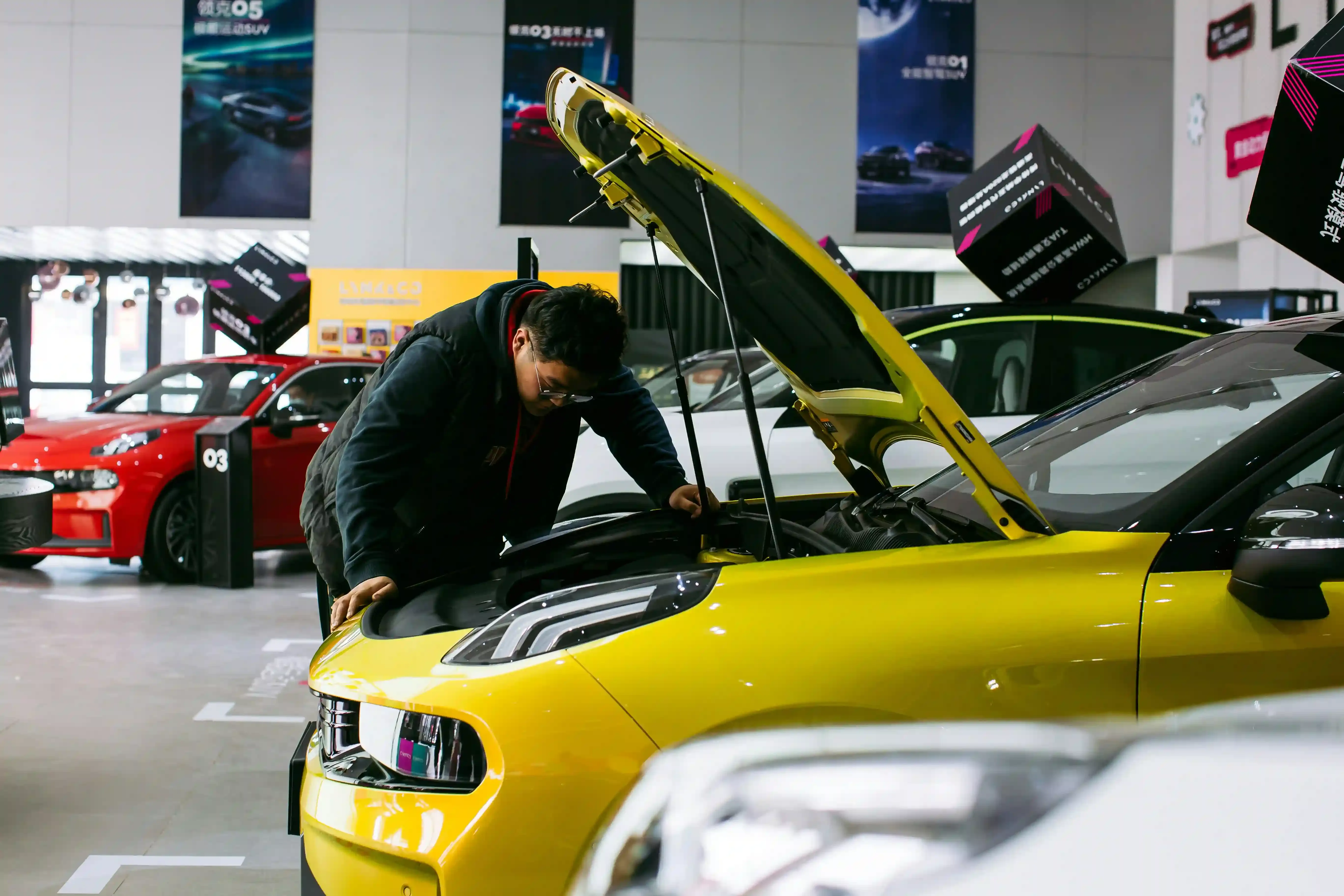
How to Inspect a Used Car Engine and Transmission: The Complete Under-Hood Guide
Engine inspection reveals leaks, wear, and costly failures. Learn how to assess condition and avoid expensive repairs before buying.
Category 3: Brakes
Direct answer: Test the brakes with three specific maneuvers: a moderate stop from 45mph to assess baseline feel and pull, a firm stop from 45mph to reveal pedal pulsation and fade, and a controlled emergency stop from 40mph in a safe location to confirm the ABS system functions and the car tracks straight under maximum braking.
11. Baseline Brake Feel
From 45mph, apply the brakes moderately — approximately 30% of pedal travel — and bring the car to a stop. The pedal should feel firm and consistent from initial application through the stop. Any sponginess — the pedal traveling significantly before resistance builds — indicates air in the brake lines or hydraulic system degradation.
12. The Straight-Line Brake Test
From 45mph on a straight road with no traffic behind you, apply the brakes firmly — approximately 60% of pedal travel — and hold through the stop. The car should track perfectly straight. Any pull to the left or right under braking indicates uneven brake force — a seized caliper, collapsed brake hose, or significantly uneven pad wear between sides.
13. The Rotor Check — Pedal Pulsation
During the firm brake test above, focus on what you feel through the brake pedal. A healthy rotor produces smooth, consistent deceleration with no feedback through the pedal. A warped rotor produces a rhythmic pulsation — a regular push-back through the pedal at a frequency that corresponds to rotor rotation speed.
14. The ABS Function Test
In a safe, empty area — an empty parking lot or quiet side street — accelerate to 25–30mph and apply the brakes hard enough to trigger ABS activation. ABS should activate as a rapid pulsation felt through the pedal — not as a loss of pedal pressure, and not as a pedal that goes to the floor. While ABS is active, the car should remain steerable. If the car locks up and skids without ABS activation, the ABS system is not functioning.
This test is not always possible to perform safely — skip it if road conditions or traffic do not permit. But if ABS function is unclear from the static inspection, this test confirms it definitively.
👉 Deep Dive: How to Inspect Used Car Brakes: Pads, Rotors, and Fluid Guide
Category 4: Steering and Suspension
Direct answer: Evaluate steering and suspension by assessing straight-line tracking, steering response in corners, suspension noise over rough surfaces, and the vehicle's return-to-center behavior after a turn. These checks identify worn ball joints, failed struts, bent subframes, and alignment problems that are invisible at rest.
15. Straight-Line Tracking
On a straight, level road, hold the wheel lightly with fingertips only — do not grip — and observe whether the car tracks straight or drifts. A properly aligned car maintains a straight course with no driver input on a level surface. A car that consistently drifts to one side has an alignment problem, uneven tire wear, or a bent subframe from a prior collision.
Note: Many roads have a slight crown that causes mild drift toward the curb. This is normal. Consistent, significant drift on a level road is not.
16. Steering Response and Centering
Drive through a gentle curve and then a sharper turn. The steering should be direct and consistent — input at the wheel should produce a proportional response from the car without lag, vagueness, or dead zone. After completing each turn, release the wheel slightly and observe whether it returns toward center on its own. Steering that does not self-center indicates alignment problems or worn steering components.
17. Suspension Noise — Low Speed
Drive slowly over a speed bump, a rough railroad crossing, or any significant pavement irregularity. The suspension should absorb the impact with a soft thud — controlled, damped, unremarkable. Any clunking, knocking, or creaking from beneath the car indicates worn suspension components: ball joints, control arm bushings, strut mounts, or sway bar end links.
The location of the noise matters. A noise specifically from the front indicates front suspension. A noise from the rear indicates rear suspension. A noise that occurs on both sides simultaneously often indicates the subframe or a crossmember issue.
18. Highway Stability
At 65–70mph, the car should feel planted, stable, and undemanding. Any wandering — a tendency to drift that requires constant minor steering corrections — indicates worn steering components, alignment problems, or worn rear suspension allowing the rear axle to shift under load.
19. The Pothole Test
At 30–40mph, drive over a significant pothole or road irregularity at moderate speed — the kind of impact the suspension was designed to absorb. The suspension should absorb it with one controlled motion. A failing strut or shock absorber produces multiple oscillations after the impact — the car bounces two or three times before settling. This is called the bounce test in its static form, and the road version is more revealing.

How to Inspect Used Car Tires: The $1,000 Negotiation Chip Most Buyers Ignore
Used car tires reveal wear, driving habits, and hidden issues. Learn how to read them and use that insight to negotiate price effectively.
Category 5: Noise, Vibration, and Harshness
Direct answer: Systematically listen for sounds that do not belong throughout the test drive — from startup through highway cruise to deceleration. Mechanical problems express themselves acoustically before they express themselves as functional failures. A sound you cannot explain is a problem you have not yet diagnosed.
20. Wind Noise and Seal Integrity
At highway speed, listen for wind noise around the doors, windows, and roof. A car with intact door seals and properly fitted glass is nearly silent at highway speed beyond road and engine noise. Wind noise indicates a door that does not seal properly — either from poor door alignment after a collision repair, or deteriorated weatherstripping. This is rarely a serious mechanical issue but is a quality indicator and a potential water ingress point.
21. Road Noise and Bearing Health
At 50–60mph, listen for a droning or humming sound that varies in pitch as you change lanes — a sound that rises and falls as the load shifts from one side of the car to the other. This is the signature sound of a failing wheel bearing. Wheel bearing replacement costs $200–$500 per bearing. Left unattended, a failed bearing eventually seizes, locking the wheel.
A simpler check: at 50mph on an empty road, gently weave the car left and right. The load shift changes the stress on each wheel bearing. If the droning sound increases during a lane change in one direction and decreases in the other, the bearing on the loaded side is failing.
22. CV Joint and Driveshaft Noise
During low-speed turning — turning sharply in a parking lot or making a tight U-turn — listen for a rhythmic clicking sound from the front of the car. This is the CV (constant velocity) joint — the flexible coupling that allows the front wheels to both steer and receive drive power. A clicking sound during tight turns is the definitive CV joint wear indicator. CV axle replacement costs $200–$400 per axle.
On rear-wheel-drive and all-wheel-drive vehicles, listen for vibration or humming from the rear of the car during acceleration that is absent during deceleration — this indicates driveshaft imbalance or a failing rear differential.
23. The After-Stop Listen
After completing the drive, park the car, leave the engine running, and sit quietly for 60 seconds. Listen. A running engine that has reached full operating temperature at rest reveals sounds that driving masks — a ticking valve train, a subtle knock, an irregular idle that smoothed out during the drive. This is a simple check that costs 60 seconds and occasionally reveals something significant.
The Test Drive Quick Reference
Use this during the drive — check each item as you assess it.
Engine
- 1. Cold start — no smoke, idle settles within 90 seconds
- 2. Acceleration — smooth, no hesitation or stumble
- 3. Hard acceleration — no misfire or power loss under load
- 4. Highway cruise — smooth, no vibration at 65–70mph
- 5. Temperature gauge — stabilizes in normal range
Transmission
- 6. Park to Drive — firm engagement within 1 second
- 7. Upshifts — smooth, no shudder or jolt
- 8. Slip test — RPM and speed rise together
- 9. Kickdown — downshifts within 1 second under hard throttle
- 10. Coasting — smooth deceleration, no vibration
Brakes
- 11. Pedal feel — firm, no sponginess
- 12. Straight-line tracking under braking — no pull
- 13. Pedal feedback — no rhythmic pulsation
- 14. ABS function — pulsation activates under hard braking (if testable)
Steering and Suspension
- 15. Straight-line tracking — no drift on level road
- 16. Steering response — direct, self-centers after turns
- 17. Suspension over bumps — one controlled motion, no clunking
- 18. Highway stability — planted, no wandering
- 19. Pothole absorption — settles after one motion
Noise and Vibration
- 20. Wind noise — minimal at highway speed
- 21. Wheel bearing — no droning that varies with lane changes
- 22. CV joints — no clicking during tight turns
- 23. After-stop listen — no ticking or idle irregularity at temperature
What to Do After the Test Drive
A clean test drive — all 23 items pass — means the car performs as a well-maintained vehicle of its type and mileage should. It does not mean the car is problem-free. It means the problems that reveal themselves dynamically are not present. The problems that require a lift, a compression test, or a scan tool may still be waiting.
That is what the Pre-Purchase Inspection resolves. The test drive clears the dynamic inspection. The PPI clears the professional inspection. Together they constitute a complete physical evaluation.
If the test drive revealed specific findings, you now have data. Document what you found — the specific symptom, when it occurred, and where it felt or sounded like it came from. A specific, documented finding is the foundation of a specific, defensible negotiating position.

Car Negotiation Scripts: Word-for-Word Lines That Could Save You Money
Car negotiation scripts for real scenarios. Learn exactly what to say, using facts like VIN reports and inspections to keep leverage on your side.
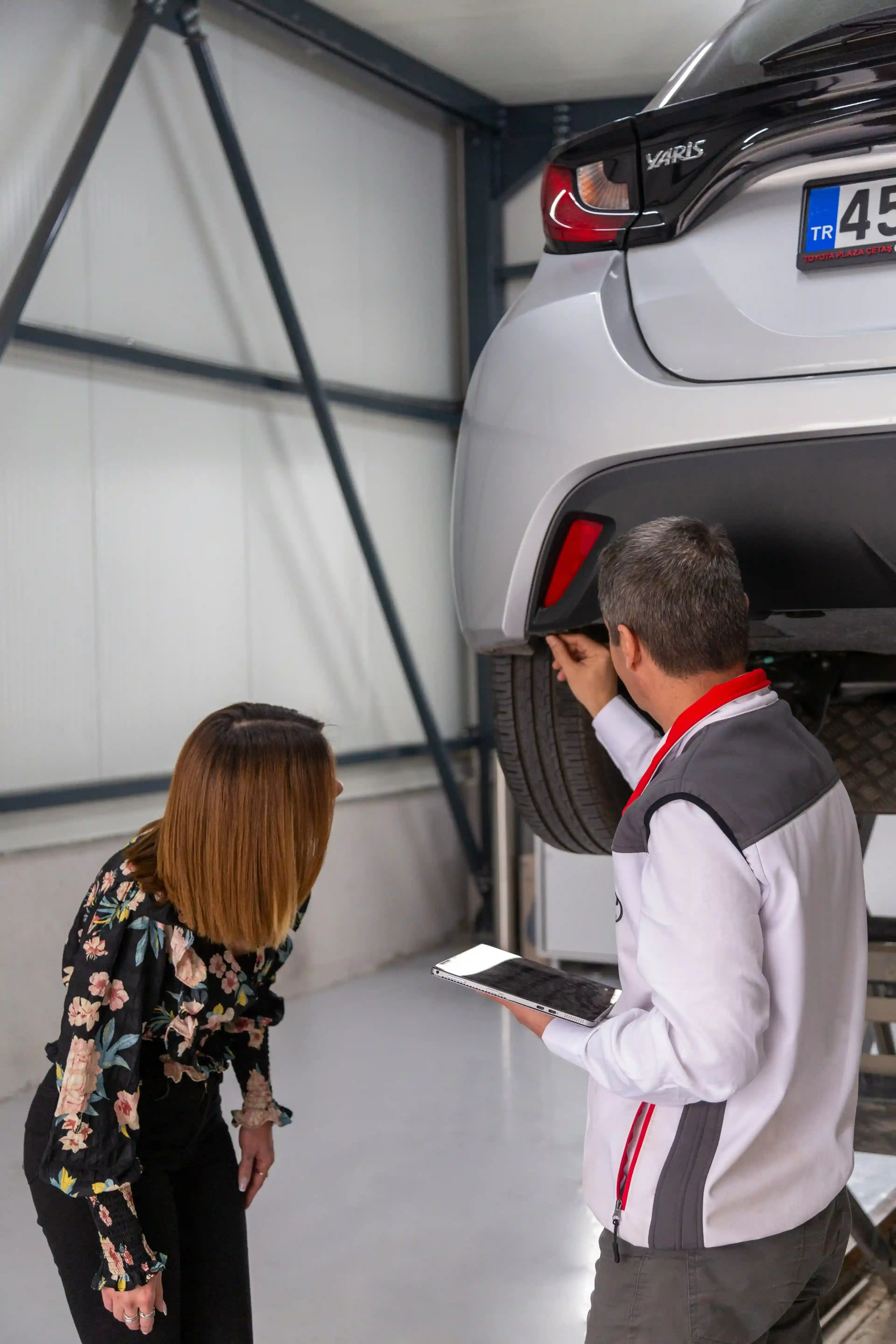
The Pre-Purchase Inspection: The Best $150 You Will Ever Spend
A pre-purchase inspection (PPI) is a mechanic’s check before buying. It reveals hidden issues and is the highest-value step to avoid costly surprises.