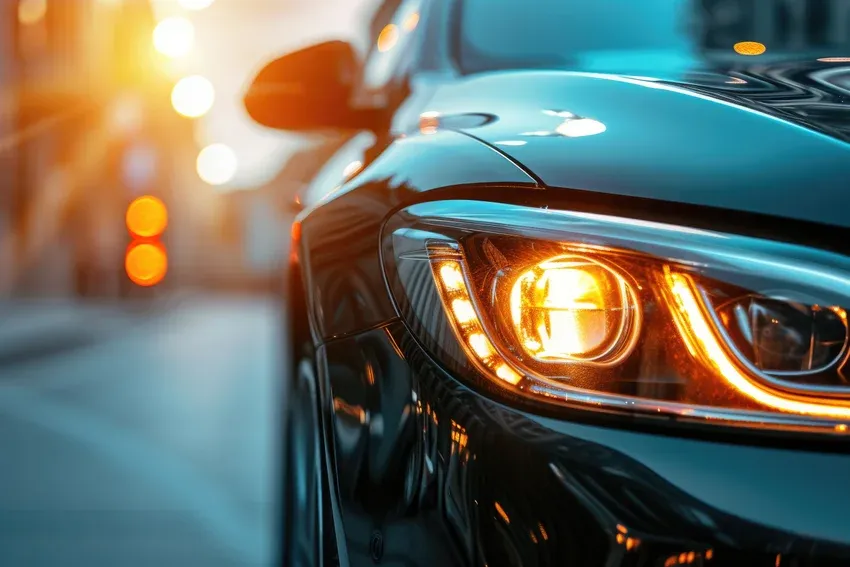
The headlight upgrade market is large and full of misleading claims. "DOT approved" labeling that means next to nothing in practice, "50,000 lumens" kits that produce blinding scatter rather than useful road illumination, and genuine high-quality options that significantly improve visibility — all exist in the same marketplace.
This guide explains what actually improves headlight performance, what the different technologies do, and how to avoid the most common and expensive mistakes. This is part of the Total Ownership Guide.
Why Headlights Degrade and When Replacement Makes Sense
Before upgrading, distinguish between two separate problems:
Lens degradation: Polycarbonate headlight lenses oxidize over time, turning yellow and hazy. This dramatically reduces light output — a hazy lens can cut output by 50–80% compared to a clear one. Lens restoration (a $15–$25 DIY kit) or replacement lenses often produce a bigger improvement than a bulb upgrade in a hazy housing. If your headlights look yellow or foggy, start there.
Actual bulb output: All bulbs degrade over time. A halogen bulb at 75% of its original life may produce significantly less light than a new one, even though it still appears to be functioning. Replacing old halogen bulbs with new halogen bulbs of the same spec is often a meaningful improvement over trying to find a more powerful alternative.
Headlight Technology: What Each Type Is
Halogen: The standard technology in the vast majority of passenger vehicles produced before 2015 and many since. Works by passing current through a tungsten filament in a halogen gas-filled glass envelope. Produces warm white to slightly yellow light. Well-understood, cheap to replace ($10–$30 per bulb), widely available, and produces predictable beam patterns in housing designs optimized for them.
HID / Xenon (High-Intensity Discharge): Produces light by arc discharge through xenon gas — significantly more light output than halogen (roughly 3× the lumens) with better color temperature and efficiency. Factory HID systems use purpose-designed projector housings that control the beam cutoff precisely. Retrofit HID kits in reflector housings designed for halogen produce significant glare because the arc point geometry does not match what the housing was designed for. Factory HID is excellent; retrofitted HID in halogen housings is problematic.
LED: Light-emitting diodes produce light with high efficiency, long life, and fast response. Factory LED systems are excellent — purpose-designed LED housings with optics matched to the LED emitter geometry. Aftermarket LED bulb retrofits into halogen housings are where significant variation in quality and legality exists. A well-designed LED retrofit with the correct emitter geometry for the housing can genuinely improve output. Poorly designed ones produce scatter and glare worse than the halogen they replaced.
Laser / Matrix LED: High-end factory technology in premium vehicles. Not a DIY upgrade category.
The Housing Problem: Why Retrofit Results Vary
This is the most important concept in headlight upgrading, and the one most frequently ignored in product marketing.
Headlight housings are designed around specific light source geometry. A reflector housing is shaped to direct light from a specific filament position in a specific direction. A projector housing focuses light through a lens from a specific arc or emitter position.
When you put a different light source — an LED emitter or HID arc — in a position that differs from the original filament position the housing was designed for, the optics may not work as intended. The result is scattered light in random directions rather than a focused beam, hot spots that don't illuminate the road effectively, and glare for oncoming drivers.
Projector housings are more forgiving of LED retrofits because the lens focuses light from a wider area. Reflector housings are less forgiving — small differences in emitter position have large effects on beam pattern.
A useful test: after installing any LED retrofit, do a beam pattern check at night against a wall or garage door at 25 feet. A correct beam should have a sharp horizontal cutoff line on the right, with a 15-degree angled step-up at the center. Diffuse scatter, hot spots, or no defined cutoff line indicates poor housing match.
LED Upgrade Options: What to Look For
"Drop-in" LED replacements for halogen housings:
What makes a good retrofit: LED emitter chips positioned to match the original filament position of the bulb being replaced. The Morimoto 2Stroke 3.0, Diode Dynamics SL1/SLF, and Putco Nitro-Lux are examples of brands that prioritize emitter positioning and beam pattern. These typically cost $60–$150 per pair — significantly more than $15 Amazon kits.
What to avoid: Multi-chip "cob" LED designs with chips positioned radially around a cylinder, which produce light from geometry completely different from a halogen filament. These generate high lumen numbers in spec sheets and poor road illumination in practice, and create significant glare.
Full headlight assembly replacement:
For many vehicles, complete LED headlight assemblies (OEM-style replacements with integrated LED optics) are available and produce the best results because the optics are designed specifically for LED emitters. More expensive ($200–$800+ per assembly) but produce OEM-quality results. For vehicles with very hazy or damaged original housings, assembly replacement also solves the lens degradation problem simultaneously.
OEM retrofit option: Some manufacturers offer factory LED headlight assemblies as direct replacements for halogen-equipped vehicles of the same generation — the LED assembly from a higher trim level fits the lower trim vehicle. This is the highest-quality retrofit path and often produces factory-correct beam patterns and integration with daytime running lights and high beam systems.
HID/Xenon Retrofits: The Better and Worse Cases
Factory HID (Xenon): Vehicles equipped with factory HID have projector housings designed specifically for the HID arc geometry. These are excellent systems. If your vehicle came with factory HID, replacing failed bulbs with quality OEM-spec replacements (Osram, Philips, Hella) is the correct service.
Retrofit HID kits in reflector housings: Generally problematic. The HID arc position does not match the halogen filament geometry the reflector was designed for, producing diffuse scatter and glare. Some jurisdictions prohibit HID retrofits in reflector housings specifically for this reason.
Retrofit HID in projector housings: Better results than reflector housings because the projector lens mitigates some geometry mismatch. Higher-quality retrofit kits (Morimoto, Retrofit Source) in projector housings can produce meaningful improvements. Not as clean as factory-matched systems.
Legality and "DOT Approved"
"DOT" on a headlight product means the manufacturer self-certifies compliance with FMVSS 108 standards. DOT does not approve headlight products in advance — there is no government testing or approval process for individual bulbs or assemblies. A manufacturer can stamp "DOT" on anything and claim compliance. Independent testing by groups like the IIHS and enthusiast organizations (SilverStar tests, Candlepower Forums beam shot comparisons) provides more useful real-world performance data than DOT marking alone.
Legality varies by state: Some states have specific laws about HID retrofits or non-OEM headlight assemblies. Street legality of aftermarket headlights is enforced inconsistently. The practical risk varies by jurisdiction and how visibly non-standard the installation is.
Insurance and liability: A light configuration that creates glare or has a non-standard beam pattern could create liability issues in an accident. Factory-matched or OEM-replacement upgrades carry lower risk than non-standard retrofits.
Cost Summary
Lens restoration
Cost range: $15–$25 DIY
Best for: Hazy/oxidized housings
Quality halogen replacement
Cost range: $20–$50/pair
Best for: Aging bulbs in good housings
Quality LED drop-in (projector housing)
Cost range: $60–$150/pair
Best for: Genuine output improvement
Quality LED drop-in (reflector housing)
Cost range: $60–$150/pair
Best for: Check beam pattern carefully
OEM LED assembly swap
Cost range: $200–$800+/assembly
Best for: Best results, highest cost
Factory HID bulb replacement
Cost range: $30–$80/bulb
Best for: Maintaining existing HID system
Frequently Asked Questions
*All ranges and costs are estimates and may vary.